
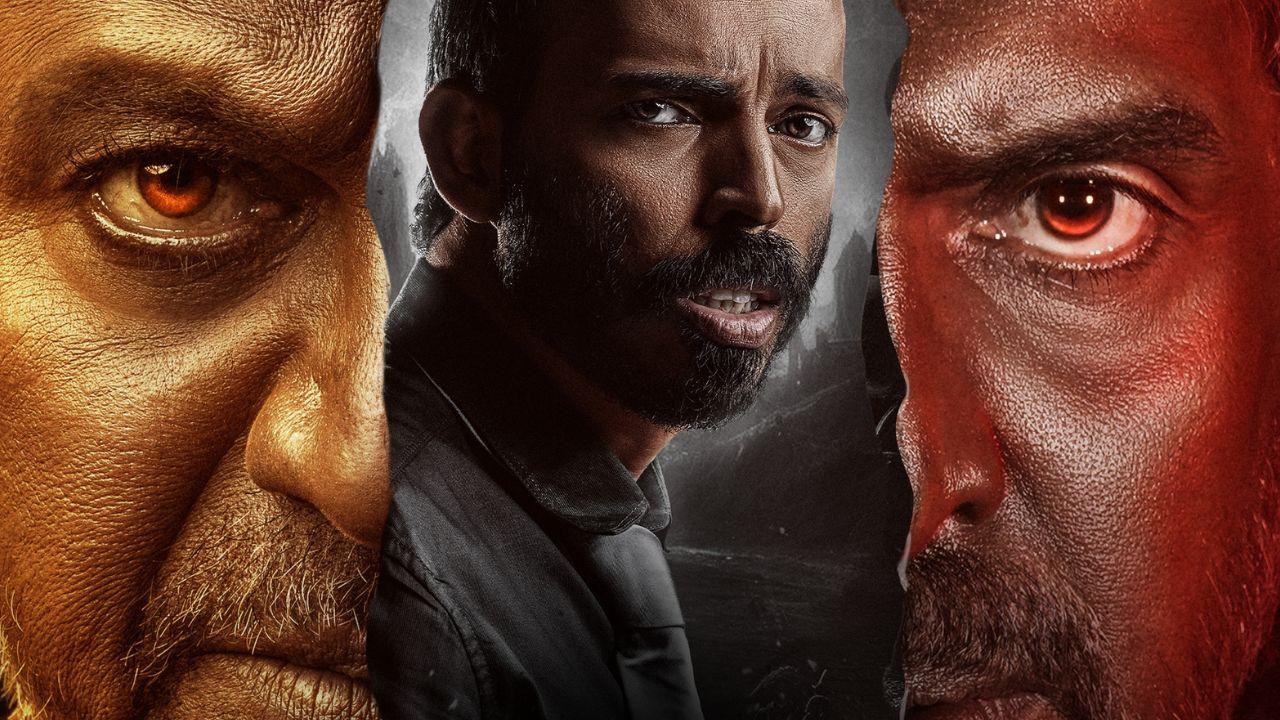
When 45 arrived in theatres on December 25, 2025, it did more than capitalize on the holiday box-office window. It announced itself as one of the most ambitious Kannada films of the year—an unusual fusion of drama, fantasy, and thriller, driven by star power, philosophical undertones, and an audacious creative gamble. Written, directed, and scored by Arjun Janya in his directorial debut, 45 is not just a film; it is a statement of intent.
Featuring a formidable cast led by Shivarajkumar, Upendra, Raj B. Shetty, and Kausthubha Mani, the film unfolds as a tense, time-bound narrative shaped around a haunting premise: what happens when an ordinary man is given 45 days to survive, knowing death is stalking him?
At 150 minutes, 45 attempts something rare in contemporary mainstream Kannada cinema—melding mass appeal with metaphysical inquiry, action with existential dread, and spectacle with symbolism. The result is a film that invites discussion as much as it demands attention.
A Director’s Leap of Faith: Arjun Janya Steps Behind the Camera
Arjun Janya has long been a familiar name in Kannada cinema, primarily known for his melodic sensibilities and commercially successful soundtracks. With 45, he takes a decisive leap—not merely directing his first feature, but also writing and composing the music, placing the entire emotional and thematic weight of the film squarely on his shoulders.
Such creative consolidation is risky, especially for a debut director. Yet Janya approaches 45 with surprising confidence, constructing a narrative that is both tightly controlled and deliberately enigmatic. His direction reflects a composer’s instinct for rhythm—moments of explosive action are followed by quiet introspection, allowing the film to breathe even as it tightens the noose around its protagonist.
What distinguishes Janya’s approach is restraint. Despite the presence of action icons and elaborate stunt choreography, 45 resists the temptation to become a constant barrage of spectacle. Instead, it builds tension gradually, using time itself as a narrative weapon.
The Power of the Countdown: Time as the Ultimate Antagonist
At the heart of 45 lies its most compelling device: a 45-day countdown that transforms time into an omnipresent threat. This structure does more than drive suspense—it reframes every decision, interaction, and moral choice.
The story follows Vinay (Raj B. Shetty), an IT professional who lives a quiet, predictable life, cocooned within his routines and personal boundaries. His world is not defined by heroism or ambition but by comfort and emotional insulation. This sense of ordinariness is crucial; Vinay is not a chosen one or a warrior by destiny. He is simply a man whose life is abruptly shattered by an unforeseen incident.
That incident draws the attention—and wrath—of Rayappa (Upendra), a character who looms over the film like an elemental force. Once Rayappa sets his sights on Vinay, survival becomes a daily battle. The 45-day timeline is not just a plot mechanic but a psychological prison, forcing Vinay—and the audience—to confront the fragility of existence.
Raj B. Shetty: Vulnerability as Strength
In recent years, Raj B. Shetty has established himself as one of Kannada cinema’s most compelling performers, known for his ability to embody deeply flawed, emotionally complex characters. As Vinay, he delivers one of his most restrained yet powerful performances.
Shetty resists melodrama, instead portraying fear as something internalized—expressed through silence, hesitation, and subtle physicality. Vinay’s terror is not always visible; it simmers beneath the surface, manifesting in sleepless nights, fractured relationships, and moments of quiet desperation.
What makes Vinay’s arc compelling is its relatability. He does not suddenly become fearless or virtuous. He makes mistakes, hesitates, and often wants to run. In a genre that frequently celebrates invincibility, 45 dares to center vulnerability as its emotional core.
Upendra as Rayappa: A Force of Chaos and Philosophy
Casting Upendra as Rayappa is both inspired and strategic. Few actors in Indian cinema possess Upendra’s ability to blend unpredictability with ideological weight. Rayappa is not a conventional villain; he is less a man than a manifestation of chaos, ego, and unchecked power.
Upendra plays Rayappa with chilling calm rather than explosive rage. His menace lies in certainty—his belief that the world operates according to his will. Rayappa does not merely want Vinay dead; he wants to assert dominance, to remind society of its hierarchies and fears.
There is a philosophical undercurrent to Rayappa’s presence. He represents the idea that power, when unchallenged, becomes self-justifying. Upendra’s performance walks a fine line between theatricality and restraint, making Rayappa both terrifying and disturbingly persuasive.
Shivarajkumar’s Shivappa: The Moral Anchor
Enter Shivappa, portrayed by Shivarajkumar, whose presence alters the film’s trajectory. Shivappa is neither savior nor superhero; he is a man shaped by experience, morality, and restraint. His arrival introduces the film’s central conflict—not just between individuals, but between values.
Shivarajkumar brings gravitas to the role, embodying a character who understands the cost of violence and the importance of standing one’s ground. Shivappa’s relationship with Vinay is not rooted in sentimentality but in principle. He steps in not because Vinay is special, but because injustice demands resistance.
The eventual face-off between Shivappa and Rayappa is less about physical dominance and more about ideological confrontation—law versus lawlessness, conscience versus ego, order versus chaos.
Fantasy as Metaphor, Not Escape
Despite being labeled as a fantasy thriller, 45 does not rely on overt supernatural elements. Instead, its fantasy lies in abstraction—dreamlike sequences, symbolic imagery, and moments where reality feels distorted under the weight of fear.
Time behaves strangely in the film. Days blur together, nightmares bleed into waking life, and the sense of inevitability becomes almost mythic. This approach allows Janya to explore existential questions without grounding them in literal fantasy tropes.
The film asks uncomfortable questions:
What would you do if you knew death was approaching?
Would you cling to comfort, or confront truth?
Is survival enough, or does dignity matter more?
Technical Craft: Controlled Precision
Visually, 45 benefits immensely from Satya Hegde’s cinematography, which favors muted tones, stark contrasts, and carefully framed compositions. The camera often lingers on empty spaces—hallways, roads, doorways—emphasizing isolation and anticipation.
Action sequences, choreographed by an elite team including Dr. K. Ravivarma, Jolly Bastian, Different Dany, and Chetan D’Souza, are sharp and purposeful. Rather than indulgent slow motion or excessive stylization, the stunts are grounded and visceral, reinforcing the film’s tone.
Editing by K. M. Prakash maintains a deliberate pace. At times, the film slows almost daringly, trusting the audience to sit with discomfort. This rhythm may challenge viewers accustomed to relentless momentum, but it ultimately strengthens the narrative.
Music as Emotional Undercurrent
As composer, Arjun Janya delivers a score that avoids grandiosity in favor of mood and texture. The background music functions like an internal monologue—sometimes barely audible, sometimes overwhelming.
The songs, choreographed by Chinni Prakash and B. Dhananjay, are integrated into the narrative rather than interrupting it. They serve as emotional pauses, offering reflection rather than release.
Themes That Linger
Beyond its surface thrills, 45 is deeply concerned with choice, accountability, and fear. The film suggests that death is not the greatest threat—apathy is. Vinay’s journey is not about defeating Rayappa, but about confronting himself.
The 45-day countdown becomes a mirror, forcing every character to reveal who they truly are when time runs out.
Reception and Cultural Context
Released during the Christmas holiday, 45 arrived at a time when audiences increasingly seek meaningful cinema alongside entertainment. While its genre-blending approach may divide viewers, it is precisely this ambition that sets the film apart.
In an industry often dominated by formula, 45 dares to be introspective without abandoning scale.
Conclusion: A Bold, Imperfect, and Necessary Film
45 is not a flawless film, but it is a courageous one. It marks a significant moment in Kannada cinema—a debut that refuses to play safe, a star-driven project that prioritizes ideas over comfort.
Arjun Janya emerges as a filmmaker to watch, Raj B. Shetty delivers a deeply human performance, Upendra redefines menace, and Shivarajkumar anchors the film with moral authority.
In the end, 45 asks a simple but unsettling question: What would you do if time itself turned against you?
The answer, like the film, stays with you long after the countdown ends.