
New Delhi:
Russian President Vladimir Putin’s visit to India this week is more than a routine bilateral summit. It is a carefully choreographed diplomatic moment that underscores India’s increasingly delicate balancing act between long-standing ties with Moscow and intensifying pressure from Washington, particularly over New Delhi’s continued imports of discounted Russian oil amid the ongoing war in Ukraine.
Putin is scheduled to arrive in India on Thursday for a two-day state visit, with formal talks with Prime Minister Narendra Modi planned for Friday. The leaders are expected to review progress across a wide range of bilateral engagements—spanning defense, energy, trade and strategic cooperation—and to sign several intergovernmental and business agreements, according to statements from both governments.
Yet the backdrop to the visit is unmistakably fraught. India’s energy relationship with Russia has become a flashpoint in its relations with the United States, with President Donald Trump imposing steep tariffs on Indian imports in retaliation for New Delhi’s purchases of Russian crude. As the war in Ukraine grinds on and global alignments harden, the summit will test India’s ability to preserve strategic autonomy without paying an unsustainable economic or diplomatic price.
A Relationship Tested by Global Upheaval
India and Russia share a partnership that dates back decades, rooted in Cold War-era strategic alignment and sustained through defense cooperation, energy ties and diplomatic support. Even as India has broadened its global partnerships—most notably with the United States and its allies—Russia has remained a key pillar of New Delhi’s foreign policy calculus.
Putin last visited India in 2021, months before Russia launched its full-scale invasion of Ukraine. Since then, the geopolitical landscape has shifted dramatically. Modi traveled to Moscow last year, and the two leaders also met briefly in September on the sidelines of the Shanghai Cooperation Organization summit in China. Those encounters reinforced continuity in ties but did little to ease Western unease over India’s refusal to distance itself from Moscow.
This week’s summit comes at a pivotal moment. The United States is renewing its push for a Ukraine peace framework and is pressing key partners, including India, to align more closely with its sanctions regime against Russia. For New Delhi, the challenge is to engage Moscow without triggering further economic retaliation from Washington.
Russian Oil at the Center of the Storm
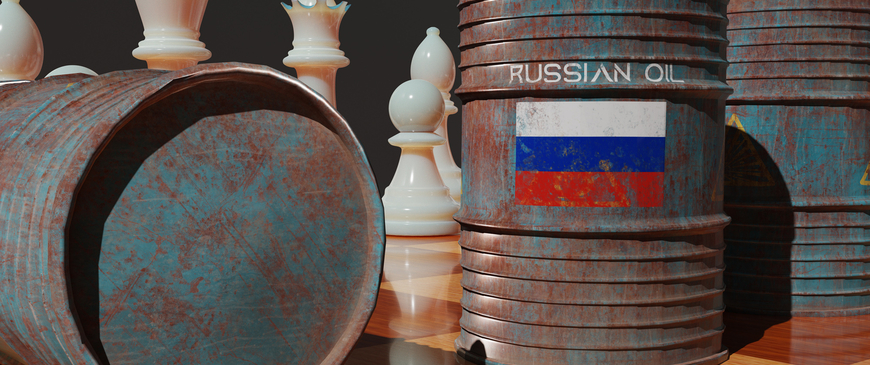
At the heart of the controversy is India’s role as a major buyer of discounted Russian oil. Since Western sanctions reshaped global energy flows, India has emerged as one of Moscow’s largest crude customers, capitalizing on lower prices to meet the energy demands of its 1.4 billion people.
New Delhi argues that its purchases are driven by national interest and energy security, not geopolitics. Officials stress that India follows international sanctions frameworks and has not violated any binding UN restrictions. The government has also pointed out that several Western countries continue to consume Russian energy indirectly through complex supply chains.
Washington, however, sees the issue differently. US officials argue that revenues from oil sales are propping up Russia’s war effort. In response, President Trump has escalated economic pressure, imposing an additional 25% tariff on Indian imports, on top of existing duties, taking the total to 50% on a wide range of goods.
The tariffs have heightened tensions between the world’s two largest democracies, raising concerns in Indian industry about competitiveness, market access and long-term trade relations.
India’s Diplomatic Tightrope
Prime Minister Modi has carefully avoided condemning Russia’s actions in Ukraine, instead emphasizing dialogue and a peaceful resolution. India has abstained from or diluted resolutions critical of Moscow at international forums, a stance that has drawn both criticism and understanding from different quarters.
Sreeram Sundar Chaulia, an international affairs expert at the Jindal School of International Affairs near New Delhi, said India’s approach reflects strategic caution rather than indifference.
“India has avoided taking on an overt mediating role because it could complicate its ties with both Russia and the U.S.,” Chaulia said. “But behind-the-scenes diplomacy by Modi is feasible, and has happened already to some extent.”
According to analysts, Modi could use his personal rapport with Putin to encourage flexibility. “He may try to nudge Putin to accommodate some Ukrainian and European concerns to bring about a cessation of hostilities,” Chaulia added, though expectations of a dramatic breakthrough remain low.
Economic Cooperation Takes Center Stage
Despite geopolitical headwinds, economic cooperation is expected to be a major focus of Putin’s visit. Indian officials involved in preparing the summit said the two sides are likely to finalize a package of agreements covering trade facilitation, maritime cooperation, healthcare, media exchanges and institutional partnerships.
India is keen to boost exports of pharmaceuticals, agricultural products and textiles to Russia, especially as Western sanctions have reshaped Russian import demand. New Delhi is also pushing for the removal of non-tariff barriers that hinder Indian businesses in the Russian market.
Another priority is fertilizers. India, one of the world’s largest agricultural producers, relies heavily on imported fertilizers, and Russia is a key supplier. Long-term supply agreements could help insulate Indian farmers from global price volatility.
However, these ambitions are tempered by logistical challenges, payment mechanisms complicated by sanctions, and uncertainty over how far India can deepen economic engagement without provoking further US retaliation.
US Pressure and the Sanctions Maze
The United States has intensified its efforts to curb India’s Russian oil imports, framing the issue as a moral and strategic imperative. Trump’s decision to impose sweeping tariffs in August was designed to send a clear message: continued engagement with Russia would carry tangible economic costs.
India has rejected the accusation that it is funding Moscow’s war machine, reiterating its commitment to international law and its right to pursue affordable energy. Yet the calculus has grown more complex following new US sanctions on major Russian oil companies, including Rosneft and Lukoil.
Indian officials have indicated that the country will avoid purchasing oil from sanctioned entities while keeping options open with companies not directly targeted. This nuanced approach reflects an attempt to comply selectively without fully severing energy ties.
“India will certainly underscore that there is no Indian desire to cut off energy supplies from Russia completely,” said Harsh Pant, vice president of foreign policy at the Observer Research Foundation in New Delhi. “Future imports will depend on market forces and how effective sanctions are in weaning away Indian private sector or state-run companies from Russian energy sources.”
Energy Cooperation Beyond Oil
Energy discussions during Putin’s visit are expected to go beyond crude oil. India has invested in Russia’s Far East, a region Moscow is eager to develop with foreign capital. Expanded cooperation in natural gas, coal and renewable energy could also feature on the agenda.
Civil nuclear energy remains a cornerstone of the bilateral relationship. The Kudankulam nuclear power plant in Tamil Nadu, built with Russian assistance, is one of India’s most significant nuclear facilities. Officials say talks are ongoing on localizing equipment manufacturing, enhancing technology transfer and exploring joint projects in third countries.
Such cooperation aligns with India’s long-term energy diversification goals, even as it navigates the constraints imposed by sanctions and geopolitical rivalry.
Defense Ties: A Strategic Constant
Defense cooperation is expected to remain central to the summit. India is likely to press Russia for faster delivery of two remaining S-400 surface-to-air missile systems under a 2018 deal valued at about $5.4 billion. India has already received three units, but deliveries have been delayed, largely due to supply chain disruptions linked to the Ukraine war.
Indian defense planners credit the S-400 with playing a critical role during a brief military standoff with Pakistan in May, reinforcing New Delhi’s interest in completing the deployment.
“There will be a focus on broader institutional cooperation on defense and ensuring delivery delays are ended,” India’s Defense Secretary Rajesh Kumar Singh said recently. While the possibility of acquiring additional S-400 units or upgraded variants may be discussed, officials caution that no announcements are expected during this visit.
Talks are also anticipated on upgrading India’s Russian-made Su-30MKI fighter jets, accelerating deliveries of spare parts and ammunition, and enhancing coordination on joint exercises and disaster relief operations.
Diversification, But Dependence Remains
Over the past decade, India has diversified its defense procurement, increasing purchases from the United States, France and Israel. Yet Russia remains its single largest arms supplier, a legacy of decades of cooperation and interoperability.
Moscow is keen to sell its fifth-generation stealth fighter jet, the Su-57, to India, positioning it as a cost-effective alternative to Western platforms. New Delhi, however, has kept its options open, weighing multiple suppliers as it modernizes its air force.
This dynamic reflects a broader trend: India seeks to reduce overdependence on any single partner while maintaining legacy relationships that still serve its strategic needs.
A Summit Laden With Symbolism
Beyond agreements and announcements, Putin’s visit carries symbolic weight. It signals Moscow’s determination to retain India as a key partner despite Western efforts to isolate Russia. For New Delhi, hosting Putin underscores its insistence on strategic autonomy and its refusal to be drawn fully into rival geopolitical camps.
Yet symbolism cuts both ways. The visit will be closely watched in Washington and European capitals, where patience with India’s hedging strategy is wearing thin. Further US economic pressure cannot be ruled out, particularly if Russian oil continues to flow into Indian refineries at scale.
The Balancing Act Ahead
As Modi and Putin sit down for talks, the underlying question is not whether India and Russia will reaffirm their partnership—they almost certainly will—but how India can sustain that relationship without incurring escalating costs in its ties with the United States.
For now, New Delhi appears determined to walk the tightrope: defending its energy security, preserving defense cooperation, and engaging diplomatically with all sides. Whether that strategy remains viable as sanctions harden and global polarization deepens is an open question.
Putin’s visit, therefore, is not just about bilateral ties. It is a window into the constraints facing middle powers in a fractured world—where strategic choices are increasingly shaped not by preference alone, but by pressure, leverage and the price of defiance.