
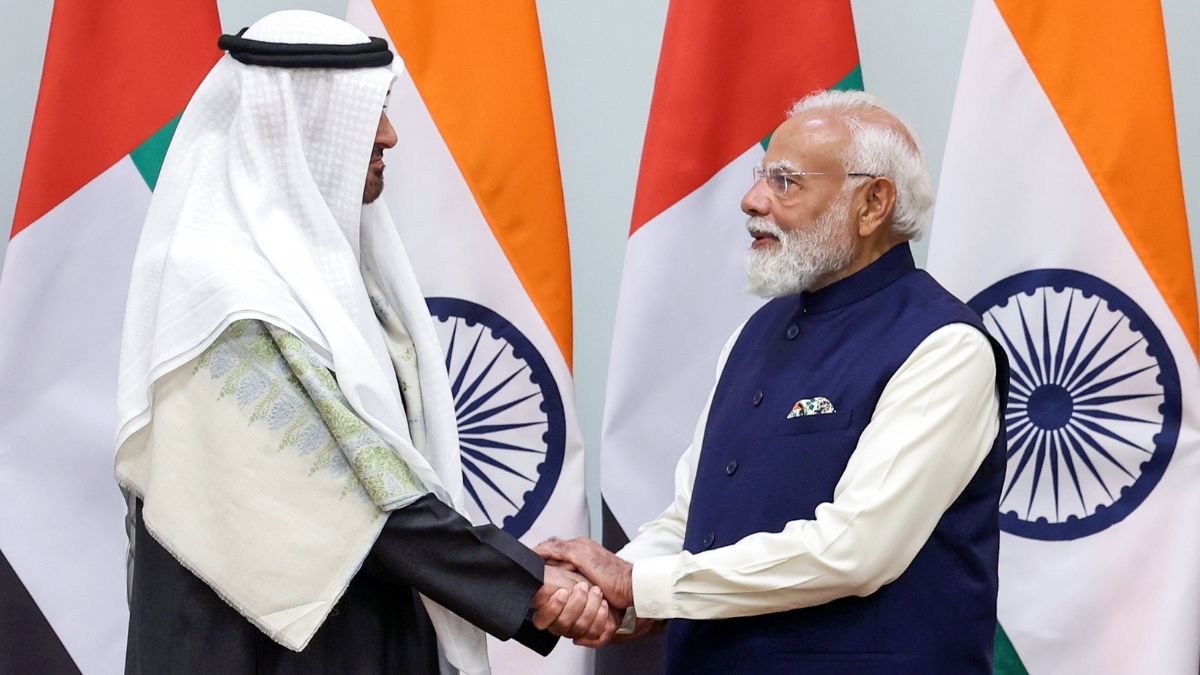
In a high‑profile diplomatic and economic engagement that underscores shifting patterns in global partnerships, India and the United Arab Emirates (UAE) have agreed to a landmark long‑term energy cooperation deal — one that could have ripple effects across Asia‑Pacific energy markets, geopolitical alignments, and global trade flows.
On Monday evening in New Delhi, Indian Prime Minister Narendra Modi and UAE President Sheikh Mohamed bin Zayed Al Nahyan presided over a whirlwind three‑hour meeting that culminated in a 10‑year liquefied natural gas (LNG) supply agreement between their respective state‑owned energy companies. Under the pact, the UAE’s Abu Dhabi National Oil Company (ADNOC) will supply up to $3 billion worth of LNG annually to India from 2028 through 2038, marking a significant deepening of energy ties between the two countries.
But the significance of the agreement transcends energy alone. New Delhi and Abu Dhabi also reiterated their joint aim to double bilateral trade to $200 billion by 2032, a bold target that reflects India’s broader strategy to diversify its economic partnerships amid lingering frustrations over stalled trade negotiations with its largest trading partner, the United States.
Analysts and policymakers alike have described the meeting, and the resulting deal, as a “strategic milestone” that reflects both countries’ ambitions to deepen economic and geopolitical ties in an era of tightening global competition and shifting alliances.
A New Phase in India‑UAE Relations
India and the UAE have been growing closer for several years. Trade between the two nations surged to $100 billion in fiscal year 2025, supported by the implementation of the Comprehensive Economic Partnership Agreement (CEPA) signed in 2022. The Gulf state ranks as India’s second‑largest trading partner — accounting for roughly 9% of total trade and 14% of non‑oil exports as of September 2025, according to data from the India Brand Equity Foundation, an initiative backed by India’s commerce ministry.
The UAE also hosts one of the largest Indian diasporas in the world — roughly 3.5 million expatriates — a demographic link that has long bolstered economic interdependence and cultural exchange between the two nations.
Despite these robust links, the tenor and scope of cooperation have recently taken on new urgency. India’s energy needs are vast and growing, driven by rapid economic expansion and a national agenda to electrify industries and households while reducing dependence on coal. At the same time, geopolitical tensions and market volatility have encouraged New Delhi to broaden its energy partnerships beyond traditional suppliers.
For the UAE, deepening ties with a rapidly growing Asian giant like India serves both economic and strategic interests, particularly as Abu Dhabi seeks to consolidate its role as a global energy hub and diversify its exports toward long‑term liquefied gas and renewable fuels markets.
The LNG Deal: Terms and Strategic Implications
Under the new agreement, ADNOC — the Abu Dhabi government‑owned energy giant — will supply LNG to Hindustan Petroleum Corporation Limited (HPCL), a major Indian state‑owned refining and marketing company. While the precise annual volume was not disclosed publicly, the total contract value — up to $3 billion over 10 years — positions India as the largest customer of ADNOC’s LNG exports, and by 2029 is expected to represent 20% of ADNOC’s global LNG sales, according to the company’s press release.
Analysts said the deal is significant for several reasons:
1. Long‑Term Energy Security for India
LNG is a cornerstone of India’s strategy to transition to cleaner‑burning fuels while meeting rising energy demand. Natural gas produces fewer carbon emissions than coal or oil, and India is actively seeking to increase the share of gas in its energy mix from roughly 6% today to 15% by 2030.
A long‑term supply agreement with a reliable producer like ADNOC helps New Delhi lock in volumes and prices over a decade — a crucial buffer against the volatility of spot markets and geopolitical disruptions, particularly in Europe and the Asia‑Pacific.
2. Strategic Diversification of Suppliers
India imports gas from a range of sources, including Qatar, the United States, and other Middle Eastern producers. The UAE deal adds weight to New Delhi’s diversification strategy, reducing over‑dependence on any single supplier and providing bargaining leverage in future negotiations.
3. UAE’s Growing Role in the LNG Market
For ADNOC, securing India as a major long‑term customer enhances its status as a key supplier in a competitive global LNG landscape. The move aligns with broader Gulf strategies to capture growing Asian demand for liquefied gas, particularly as China, Japan, and South Korea also seek reliable energy partners.
4. Geopolitical Resonance
Beyond economics, the deal is emblematic of shifting geopolitical currents. India’s relationship with the UAE has increasingly blended economic cooperation with strategic and diplomatic engagement. The two countries have coordinated on regional security issues, counterterrorism, and investment flows — particularly in technology and infrastructure. The LNG contract strengthens this multidimensional partnership, highlighting how energy linkages are becoming critical pillars of India’s broader foreign policy.
Doubling Trade to $200 Billion: A Shared Vision
Alongside the LNG agreement, both leaders pledged to pursue a dramatic expansion in bilateral trade — from roughly $100 billion in 2025 to $200 billion by 2032. Achieving such an ambitious target will require concerted efforts across sectors, including:
- Energy and petrochemicals
- Information technology and digital services
- Infrastructure and construction
- Healthcare and pharmaceuticals
- Financial services and investment
India’s commerce ministry has highlighted several areas of mutual interest — including fintech, renewable energy, agribusiness, and logistics — as potential engines of growth.
Prime Minister Modi emphasized the breadth of the partnership in a post on X, noting that the discussions covered “a wide range of issues aimed at further strengthening the multifaceted India‑UAE friendship.” While he did not provide a detailed roadmap, the combination of energy cooperation and trade expansion reflects an evolving vision of bilateral engagement that goes well beyond hydrocarbons.
Observers said the commitment to a $200 billion trade target — double the current annual volume — is both ambitious and achievable, contingent on policy coordination, private sector involvement, and continued diplomatic momentum.
Why the U.S. Trade Deal Remains Elusive
India’s pivot toward the UAE and other partners comes at a time of growing frustration over protracted negotiations with its biggest trading partner — the United States.
In August last year, Washington imposed tariffs of up to 50% on a range of Indian exports, including aluminum and steel products, citing national security concerns. The elevated duties have squeezed Indian exporters, particularly in sectors like iron and steel, and complicated attempts by New Delhi to negotiate a comprehensive trade agreement with the U.S.
Analysts say the tariff dispute underscores broader challenges in U.S.–India economic relations, including disagreements over intellectual property protections, data governance, and market access. While trade officials from both sides have met periodically to address these issues, a comprehensive deal that would eliminate tariffs and deepen economic integration has so far failed to materialize.
Harsh Pant, vice president for studies and foreign policy at the New Delhi‑based Observer Research Foundation, said the India‑UAE engagement reflects both opportunity and caution: “Even with a trade deal [with the U.S.], there is no guarantee that political unpredictability would end,” Pant told CNBC’s Inside India. “That is why India has been reaching out to finalize trade deals with other countries.”
New Trade Agreements: A Diversification Strategy
New Delhi’s recent trade diplomacy illustrates a broader effort to mitigate risks associated with overreliance on any single market. Last year, after the imposition of U.S. tariffs, India secured trade pacts with the United Kingdom and Oman, both aimed at reducing barriers and boosting exports in key sectors.
India has also announced plans to finalize a trade agreement with New Zealand in the first half of 2026, following similar negotiations with the Gulf Cooperation Council (GCC) and Southeast Asian partners.
These developments reflect a pragmatic trade strategy: expand India’s network of economic partnerships to create alternative export destinations, attract foreign direct investment, and enhance resilience in a fractious global trade environment.
Energy Market Implications Beyond India and the UAE
The LNG agreement between India and the UAE has implications that extend well beyond the bilateral relationship:
Impact on Asian Energy Markets
Asia is the world’s fastest‑growing market for natural gas, driven by demand from China, India, Southeast Asia, and markets seeking cleaner alternatives to coal. India’s long‑term LNG needs are expected to rise sharply as industrial, residential, and power generation demand grows.
The Indian‑UAE deal could accelerate similar contracts between Gulf producers and Asian consumers, amplifying competition among LNG suppliers for long‑term contracts. This could, in turn, influence pricing structures and the balance between spot and contract markets.
Transition Fuel in the Clean Energy Transition
Natural gas is widely considered a transitional fuel as economies shift toward renewable energy sources. Long‑term contracts like the one signed between India and the UAE help underwrite the financing of new LNG infrastructure — from liquefaction facilities in producing countries to regasification terminals in consuming nations.
For India, securing predictable LNG volumes supports energy security goals while complementing national ambitions to expand solar, wind, and green hydrogen production over the next decade.
Strategic Ties Beyond Energy
Energy deals of this scale often lay the groundwork for broader geostrategic cooperation. India and the UAE already collaborate on counterterrorism, defense, and regional stability initiatives. Shared economic interests — particularly in energy — reinforce these strategic partnerships and cement long‑term alignments in a volatile geopolitical landscape.
Diaspora and People‑to‑People Ties Strengthening Engagement
Economic agreements do not occur in isolation from broader societal ties. The Indian community in the UAE, one of the largest expatriate populations in the Gulf, plays an instrumental role in bridging cultures, commerce, and investment flows.
Remittances from Indian expatriates in the UAE contribute significantly to India’s foreign exchange reserves. Moreover, Indian professionals in sectors such as healthcare, information technology, logistics, and construction have helped deepen economic integration at multiple levels.
These people‑to‑people connections reinforce the political will in both Delhi and Abu Dhabi to maintain strong bilateral ties, even in times of geopolitical uncertainty.
Looking Forward: What Comes Next
With the new LNG agreement set to take effect in 2028, attention will now turn to the strategic and operational elements of its implementation. Both governments are expected to establish working groups to oversee logistical coordination, infrastructure development, and regulatory alignment to ensure smooth delivery over the next decade.
Simultaneously, India and the UAE are likely to expand cooperation in downstream sectors such as petrochemicals, refining, renewable energy, and joint investment vehicles — frameworks that can help drive the ambition to double bilateral trade by 2032.
At the same time, India’s trade negotiation strategy will remain under close observation, especially its ongoing efforts to engage with Western economies, ASEAN partners, and other Middle Eastern states.
Conclusion: A Strategic Partnership in a Multipolar World
The $3 billion LNG agreement represents more than a commercial contract — it marks a strategic milestone in India’s evolving foreign and economic policy. In the face of stalled negotiations with the United States and growing global economic uncertainty, New Delhi has moved assertively to strengthen relationships with partners who can offer predictability, complementary economic opportunities, and shared vision.
For the UAE, securing a long‑term energy partnership with India deepens ties with one of Asia’s most consequential markets, reinforcing Abu Dhabi’s role as a key energy exporter in a diversifying global economy.
As India and the UAE work toward doubling their bilateral trade and expanding cooperation into new arenas, the deal stands as both a testament to diplomatic synergy and a blueprint for how emerging partnerships can thrive amid shifting global dynamics.
In a world of competing economic blocs and geopolitical uncertainty, strategic agreements like this one are not merely transactional — they are foundational.