
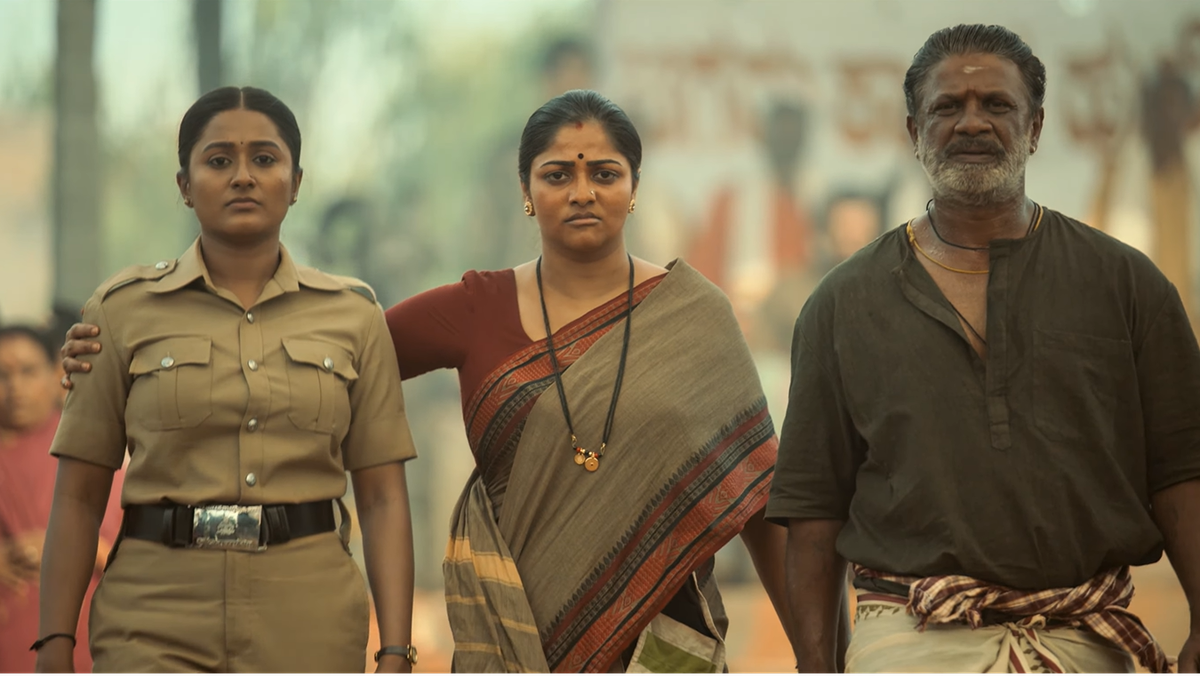
Kannada cinema has long been a fertile ground for socially resonant action dramas, blending high-octane sequences with narratives that explore rural hierarchies, caste, and class struggles. The latest entry in this lineage is “Landlord”, directed by Jadesh Kumar Hampe, a film that combines visceral action, poignant social commentary, and a portrait of rural India’s power dynamics. Released on January 23, 2026, the film features a strong ensemble cast led by Duniya Vijay, Raj B Shetty, Rachita Ram, Shishir Baikady, and Rithnya Vijay, supported by Achyuth Kumar, Umashri, Mithra, Rakesh Adiga, Abhishek Das, and others. With music composed by B. Ajaneesh Loknath, cinematography by Swamy J Gowda, and editing handled by KM Prakash, the film is produced under the Sri Araveshwari Cine Production banner by K.S. Suraj Gowda and K.V. Sathyaprakash.
At its core, Landlord is an action drama interwoven with social relevance, highlighting the struggles of rural laborers against entrenched feudal systems and the quest for justice within the framework of constitutional law.
Plot Overview
The narrative centers on Rachayya (Duniya Vijay), a former resident of Ramadurga who now works as a daily wage laborer in the village of Hulidurga. Rachayya’s life is defined by a simple yet profound aspiration: to own two acres of land and cultivate it, thereby achieving a dignified life independent of oppressive landlords. This dream, however, collides with the formidable power of Chikkejamanru (Raj B Shetty), the local landlord whose word is absolute.
Chikkejamanru embodies the ruthless, feudal mindset that has plagued rural India for generations. His ideology is clear: if laborers were allowed to own land, the hierarchical structure that grants landlords unchallenged authority would crumble. Within Hulidurga, his control extends beyond property; he dominates the village’s social, political, and economic life. Even the police station, which exists in name, is effectively under his jurisdiction.
The story escalates when Rachayya’s daughter, Bhagya (Rithnya Vijay), joins the same police station as a constable. Her presence marks a significant shift in the power dynamics of the village. Together, father and daughter confront Chikkejamanru’s reign, determined to challenge centuries of oppression using the tools of law and governance. As they struggle to assert justice, Rachayya is forced to take up arms once more, setting the stage for a conflict that combines personal vengeance, social responsibility, and political awakening.
Themes and Social Commentary
At its heart, Landlord is more than just an action film. It interrogates the feudal structures that continue to shape rural India, examining the tension between laborers’ aspirations and landlords’ entrenched power. The film foregrounds the idea that property ownership is not merely an economic issue but a matter of dignity and agency. Rachayya’s fight is emblematic of this broader social struggle: the desire for autonomy and equality in the face of systemic oppression.
Director Jadesh Kumar Hampe deftly juxtaposes personal and societal stakes. On one hand, we have Rachayya’s familial responsibilities and the love for his daughter. On the other, there is a broader commentary on governance, justice, and the transformative potential of constitutional law. The film makes a clear statement: true change in society comes not just through physical confrontation but through understanding and leveraging the mechanisms of law. This dual narrative—personal and political—adds depth to what could otherwise have been a straightforward revenge drama.
Another notable theme is intergenerational collaboration. Bhagya’s role as a constable symbolizes the new generation’s engagement with formal systems of justice. Her presence allows the film to explore modern approaches to age-old problems, emphasizing that systemic change requires both courage and institutional support. The father-daughter dynamic is central to the story, providing both emotional weight and narrative propulsion.
Performances
The cast of Landlord delivers performances that anchor the film’s social and emotional stakes.
Duniya Vijay embodies Rachayya with a grounded intensity. His portrayal of a man torn between survival, aspiration, and moral duty is nuanced, showing both vulnerability and relentless determination. The character’s transformation from a passive laborer to an active agent of justice feels organic, supported by Vijay’s physicality and emotive performance.
Raj B Shetty, as Chikkejamanru, is a commanding presence. He brings a chilling authority to the role, perfectly embodying the ruthless, almost mythic power of feudal landlords. His performance is multifaceted: while outwardly oppressive, there are glimpses of a complex psyche shaped by privilege, fear of losing control, and a distorted sense of societal order. Shetty’s ability to oscillate between brute force and subtle manipulation elevates the film’s tension and gives Rachayya a formidable adversary.
Rithnya Vijay, as Bhagya, provides a strong counterpoint to the male leads. Her portrayal of a young constable navigating male-dominated power structures is compelling. Bhagya is both empathetic and authoritative, demonstrating a balance of emotional intelligence and procedural rigor. Her chemistry with Duniya Vijay adds authenticity to the familial bond, highlighting the emotional stakes underlying the story’s social commentary.
Supporting roles are well-cast, with Rachita Ram, Shishir Baikady, Achyuth Kumar, and Umashri contributing significantly to the narrative. Each character adds texture to the story, representing various facets of village life—from the oppressed laborer to the complicit middle class—creating a believable, multi-dimensional rural landscape.
Direction and Narrative Structure
Jadesh Kumar Hampe’s direction in Landlord reflects both confidence and restraint. He allows the story to unfold at a measured pace, ensuring that action sequences, emotional beats, and social commentary each receive adequate attention. Unlike some commercial action dramas, the film avoids excessive melodrama, instead grounding conflicts in relatable human experiences.
The narrative structure effectively balances action, drama, and social critique. The first act establishes Rachayya’s world and aspirations, introducing the audience to Hulidurga and its power dynamics. The second act escalates tension with Bhagya’s entry into the police station and the growing confrontation with Chikkejamanru. The final act delivers both action-driven climax and emotional resolution, reinforcing the film’s central themes of justice and dignity.
Hampe also demonstrates an understanding of rural cinematic aesthetics. He portrays Hulidurga not as a romanticized village but as a living, breathing environment where social hierarchies, political influence, and daily survival intersect. The director’s attention to small details—the layout of the village, interactions among laborers, and symbolic use of land ownership—adds layers of authenticity to the story.
Cinematography and Visuals
Swamy J Gowda’s cinematography is a standout element of Landlord. He captures both the starkness and beauty of rural Karnataka with an eye for detail. The landscapes—fields, village streets, and the laborers’ modest homes—are shot with a naturalistic sensibility, enhancing the realism of the narrative. Gowda uses framing and lighting to emphasize power dynamics: Chikkejamanru is often shown in dominating positions or harsh light, whereas Rachayya’s struggles are depicted with softer, grounded visuals.
Action sequences are visually coherent, avoiding the chaos sometimes seen in commercial action films. The choreography emphasizes narrative significance over spectacle, ensuring that each fight or confrontation carries both emotional and thematic weight. The combination of naturalistic lighting and precise camera work gives the film a cinematic polish that supports its social drama ambitions.
Music and Sound Design
The soundtrack by B. Ajaneesh Loknath complements the film’s narrative without overwhelming it. Music underscores emotional beats, heightening tension during confrontations while subtly accentuating quieter familial moments. Loknath’s score, blending traditional and contemporary elements, reflects the film’s thematic duality—rooted in rural life yet addressing modern concerns about justice and equality.
Sound design is equally effective. Rural ambiances, from the rhythmic sounds of farming to village marketplaces, are rendered authentically, immersing audiences in Hulidurga. Gunshots, physical confrontations, and environmental sounds are balanced to create tension while maintaining realism, avoiding the exaggerated sonic cues often associated with commercial action films.
Editing and Pacing
Editor KM Prakash crafts a narrative rhythm that allows both story and character development to breathe. The film’s 156-minute runtime could have been a challenge, but careful sequencing ensures that momentum is maintained throughout. Emotional moments are given space to resonate, while action sequences are intercut with tension-building shots that enhance narrative impact. The editing balances multiple storylines—the father’s struggle, the daughter’s professional growth, and the village-wide power dynamics—without confusing the audience.
Social Relevance and Commentary
Landlord shines when it foregrounds its social message. In a time when rural land rights, laborers’ autonomy, and governance are increasingly discussed in public discourse, the film resonates with real-world relevance. It underscores the idea that justice is not merely a function of law enforcement but requires courage, knowledge, and collective will.
The father-daughter collaboration serves as a metaphor for societal change: bridging generational gaps, using education and institutional knowledge to confront entrenched power. By emphasizing constitutional law as the ultimate tool for change, the film educates as it entertains, blending social responsibility with cinematic spectacle.
Action Sequences
Action in Landlord is both visceral and narratively meaningful. Unlike mindless fight scenes, the choreography reflects character motivations and thematic stakes. Each confrontation between Rachayya and Chikkejamanru carries symbolic weight: it is not just physical combat but a clash of ideologies—labor rights versus feudal dominance. Director Hampe ensures that the violence never overshadows the story, instead enhancing its emotional and social dimensions.
Music, Symbolism, and Cinematic Language
Music, visual motifs, and symbolism enrich the narrative. Land, for instance, is both literal and metaphorical—representing not only property but dignity, autonomy, and resistance. Cinematic techniques, from framing to lighting, reinforce these motifs, giving the film a cohesive aesthetic that supports its thematic ambitions. Even small details, such as the placement of the police station in the village or the recurring imagery of crops and fields, reinforce the social commentary, illustrating the interconnection between land ownership, social hierarchy, and personal empowerment.
Comparative Context in Kannada Cinema
Landlord fits within a longstanding tradition of socially conscious Kannada cinema, which blends action with meaningful narratives. Films like Ugramm and Kirik Party (in different genres) have explored rural power dynamics, youth rebellion, and social mobility. Landlord distinguishes itself by combining intergenerational perspectives, constitutional literacy, and a deep engagement with class and feudal structures, marking it as both a commercial and socially resonant entry in contemporary Kannada cinema.
Conclusion
Landlord (2026) is an action drama that successfully balances entertainment with social consciousness. It offers a visually compelling, emotionally engaging, and intellectually relevant cinematic experience. The performances, particularly from Duniya Vijay, Raj B Shetty, and Rithnya Vijay, are top-notch, grounding the film’s narrative in authenticity. Director Jadesh Kumar Hampe demonstrates maturity in handling complex themes, blending action, drama, and social critique without sacrificing pacing or audience engagement.
While the film occasionally flirts with melodrama, and certain secondary arcs could have been explored further, these are minor blemishes in an otherwise compelling cinematic achievement. Its exploration of land rights, labor dignity, and intergenerational collaboration ensures it resonates with contemporary audiences while adhering to the enduring appeal of Kannada action dramas.
Landlord is a story of courage, justice, and the triumph of law and righteousness over feudal oppression—a cinematic testament to the enduring fight for dignity in rural India. For audiences seeking action-packed drama grounded in social relevance, this film stands out as a must-watch in 2026.