
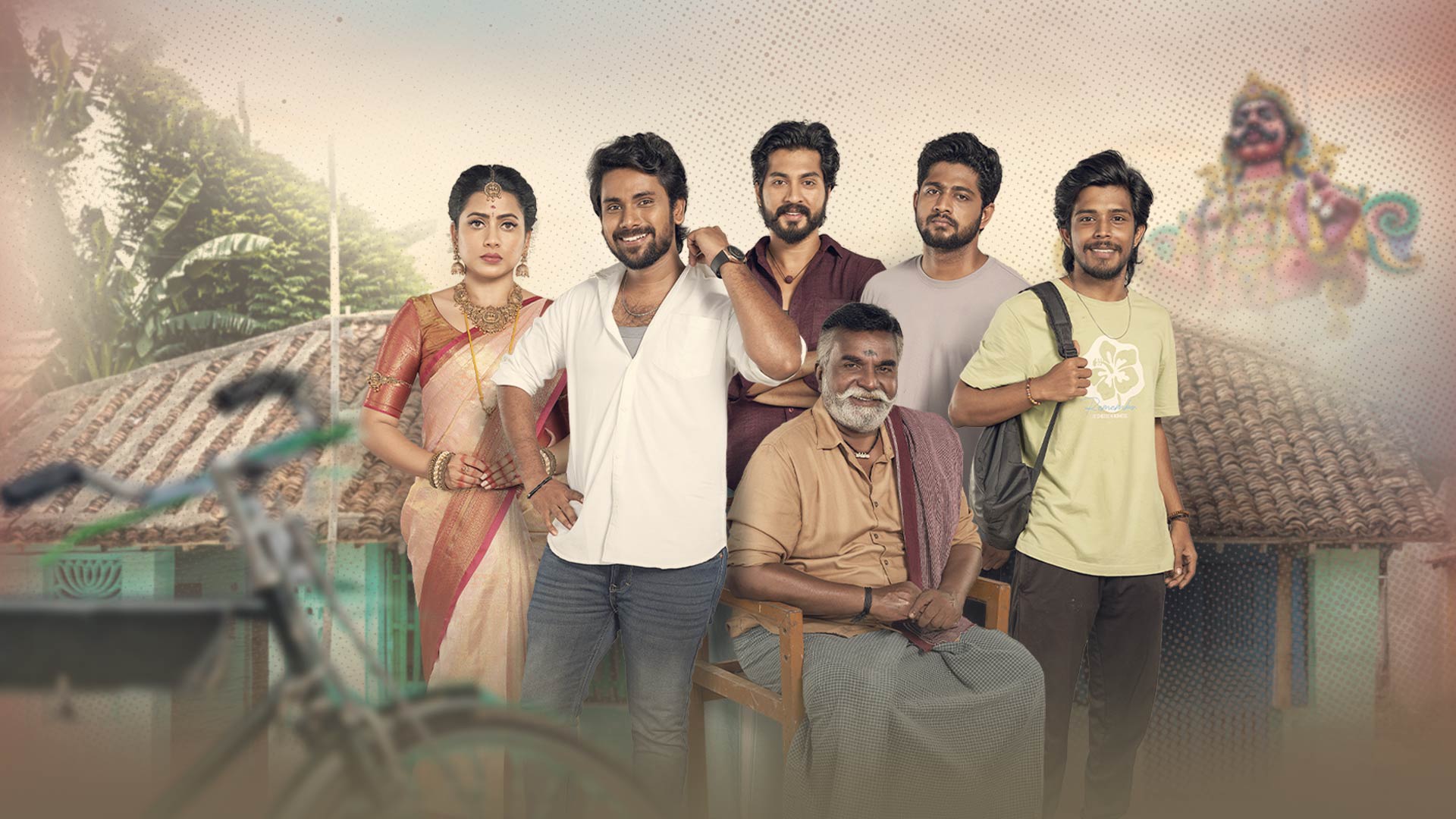
In a television landscape dominated by formulaic family dramas, Ayyanar Thunai (“Support of Ayyanar”), which premiered on Star Vijay on 27 January 2025, has quickly emerged as a show that blends modern aspirations with deep-rooted traditional values. Produced by R. Venkatesh Babu and Vaishnavi V. under the Global Villagers banner, and directed by a team committed to storytelling authenticity, the series weaves a narrative that resonates with contemporary Tamil audiences while maintaining cultural nuance. The show is also available on the digital platform JioHotstar, allowing for a broader reach among younger, tech-savvy viewers. (en.wikipedia.org)
Origins and Production
Ayyanar Thunai represents a collaboration of experienced television professionals aiming to tell a story that blends societal commentary with heartfelt family drama. The series’ production emphasizes realism: shooting in authentic Tamil Nadu locales, highlighting rural and semi-urban life, and capturing the contrasts between traditional family structures and modern individual aspirations.
The series’ narrative and aesthetic choices are reflective of contemporary Tamil television’s evolving priorities — balancing moral lessons with relatable character arcs, while ensuring high production value. It debuted alongside several other new shows on Star Vijay in 2025, but it quickly carved out its own identity, thanks to a mix of compelling performances and a socially relevant plot.
Plot Synopsis
At its heart, Ayyanar Thunai is a story about Nila, a young woman whose ambition and intellect place her at a crossroads between tradition and personal freedom. Nila, a gold medalist in architecture and university rank holder, aspires to study abroad and establish herself as a professional. Her journey, however, is obstructed by her wealthy father, who arranges her marriage to a man expecting a conventional, domestic wife. This setup forces Nila into a life that clashes with her personal aspirations and worldview. (en.wikipedia.org)
Fate intervenes in the form of Chozhan, a modest cab driver with strong familial values and deep-rooted respect for tradition. Chozhan lives in a household struggling to maintain its stability following the death of their mother. His father, Natesan, a former truck driver, succumbs to alcoholism in grief, leaving Chozhan and his three brothers — Cheran, Pandian, and Pallavan — to navigate life’s challenges without maternal guidance. The family also faces legal and financial difficulties, complicating their existence further. (en.wikipedia.org)
Nila’s entry into Chozhan’s household marks a transformative moment. Her education, foresight, and organizational skills begin to influence the family, helping them resolve long-standing challenges while also creating tension due to the clash of her modern outlook with traditional expectations. Over time, Nila and Chozhan’s relationship evolves from initial misunderstandings to mutual respect, highlighting the series’ central theme: the balance between individual ambition and familial duty.
Characters and Cast
Ayyanar Thunai features a compelling ensemble of actors who bring depth and nuance to their roles:
- Madhumitha Hirannaiah as Nila Chozhan: Nila is not a passive heroine; she embodies ambition, intelligence, and resilience. Madhumitha brings a layered performance, making Nila both relatable and aspirational. She challenges gender norms while maintaining empathy for traditional family dynamics. (en.wikipedia.org)
- Aravinth Seiju as Chozhan: Chozhan represents the everyday man rooted in morality and respect for family. His journey is less about personal ambition and more about rediscovering hope and stability in the wake of familial adversity. Aravinth’s portrayal balances charm, sensitivity, and moral strength, endearing him to audiences. (en.wikipedia.org)
- Munaf Rahman as Cheran: The eldest brother, a mason, is responsible and protective of his family. His character represents the elder sibling archetype prevalent in Tamil dramas, balancing authority with compassion.
- VJ Arun Karthi as Pandian: The third son and mechanic, Pandian is practical, hardworking, and occasionally impulsive. His character provides both comic relief and moral insight.
- Parvez Musharaf as Pallavan: A B.Com student, Pallavan represents youthful idealism and academic ambition within the family, contrasting with the manual labor roles of his brothers.
- S. T. P. Rosary as Natesan: The patriarch of the Ayyanar family, Natesan is a layered character, grappling with grief and personal failures. His descent into alcoholism is portrayed with sensitivity, highlighting social issues often glossed over in mainstream television.
Together, the cast creates a dynamic ensemble that drives the story forward, with relationships and interpersonal conflicts forming the backbone of the series.
Themes and Motifs
1. Tradition vs. Modernity
One of the central themes of Ayyanar Thunai is the tension between traditional familial expectations and individual ambitions. Nila’s struggle to pursue higher education abroad while respecting her father’s authority reflects a broader societal conflict in contemporary India — the desire for personal advancement clashing with entrenched norms.
2. Family as a Source of Strength and Conflict
The series explores the duality of family as both supportive and restrictive. Chozhan’s household is a microcosm of this tension: while his brothers and father are bound by love, their struggles — emotional, financial, and social — create friction that must be navigated carefully. Nila’s influence helps mediate conflicts, showcasing the transformative power of empathy and education.
3. Gender Roles and Empowerment
Nila’s character challenges traditional gender expectations. While her father expects her to be a housewife, her professional aspirations and intellectual prowess position her as a role model for young women, emphasizing self-determination and resilience in the face of societal pressure.
4. Social Commentary
Through Natesan’s alcoholism, the family’s legal challenges, and societal pressures on the Ayyanar household, the series highlights issues often ignored in mainstream storytelling: grief management, economic vulnerability, and the societal value of women’s labor, both domestic and professional.
Narrative Structure and Style
The storytelling of Ayyanar Thunai employs a classic episodic structure, with each episode balancing character development, plot progression, and social commentary. Flashbacks and character introspection are used strategically to provide context for personal decisions and conflicts.
Cinematographically, the series utilizes naturalistic lighting and on-location shooting, enhancing authenticity. The depiction of Chozhan’s modest home versus Nila’s affluent background visually underscores the thematic contrasts of wealth, social status, and opportunity.
Dialogue is another strength. Writers ensure conversations reflect both emotional depth and cultural realism, avoiding over-the-top dramatics typical of some soaps. This approach has helped the series connect with viewers seeking nuanced storytelling.
Reception and Audience Impact
Despite being a recent entry in Tamil television (premiering in January 2025), Ayyanar Thunai has received positive critical and viewer feedback. Audiences appreciate its grounded portrayal of familial and societal struggles, its progressive yet culturally sensitive take on gender roles, and its strong performances.
The show has particularly resonated with younger audiences who identify with Nila’s ambitions and frustrations, while older viewers relate to Chozhan’s moral compass and the generational tensions within the Ayyanar family. Social media discussions and fan forums highlight appreciation for Madhumitha Hirannaiah’s portrayal of Nila, noting her balance of strength and empathy as particularly inspiring.
Challenges and Critiques
No show is without critique. Some viewers argue that Ayyanar Thunai’s pacing can be slow, particularly in early episodes as character backgrounds are established. Others note that the show sometimes leans heavily on archetypes — the dutiful eldest son, the responsible yet grieving father, and the ambitious young woman — which can feel familiar to seasoned soap audiences.
However, these critiques are largely overshadowed by the series’ strengths: authentic dialogue, cultural relevance, and emotionally engaging storylines. The careful balance between drama and social commentary distinguishes it from typical melodramatic fare.
Cultural Significance
Ayyanar Thunai holds particular significance in Tamil television for its exploration of education, gender, and family duty within a rural and semi-urban context. It subtly challenges the notion that ambition and traditional family values are incompatible. Nila’s character represents a new generation of women negotiating societal expectations while pursuing personal goals, a theme that resonates strongly in contemporary Tamil Nadu and beyond.
Additionally, the series’ depiction of Chozhan’s family — grappling with grief, economic difficulties, and patriarchal structures — reflects real-world challenges often overlooked in popular media. By combining entertainment with social realism, the show contributes to a more nuanced representation of Tamil familial life.
Behind the Scenes: Production Insights
The creators of Ayyanar Thunai have emphasized research and authenticity. Reports indicate that Madhumitha and Aravinth participated in workshops to understand rural family dynamics and the socioeconomic pressures of middle-class households. Set designs and props are sourced locally, reflecting attention to detail in costume, interior design, and regional aesthetics.
The musical score, understated yet emotive, complements the show’s dramatic arcs without overwhelming the narrative. Cinematic choices, including medium close-ups and long shots of family interactions, allow the audience to feel immersed in the characters’ emotional landscapes.
Future Trajectories
As Ayyanar Thunai unfolds, several narrative arcs promise continued engagement:
- Nila’s Professional Journey: Will Nila pursue opportunities abroad, and how will her professional identity coexist with her marital and familial responsibilities?
- Chozhan and Nila’s Relationship: Their evolving partnership forms the heart of the show. Exploring how mutual respect, love, and cultural compromise shape their marriage will be central to future episodes.
- Family Healing: Natesan’s alcoholism and the brothers’ unresolved tensions present ongoing narrative challenges. Nila’s influence may be instrumental in guiding the family toward stability.
- Societal Conflicts: Legal disputes, societal pressures, and expectations from extended family members are poised to create both dramatic tension and opportunities for moral exploration.
Conclusion
Ayyanar Thunai has quickly emerged as a standout Tamil television drama, not simply for its storytelling but for the thoughtful way it navigates complex issues of family, ambition, and social expectations. Its success lies in its authentic characterizations, socially conscious narrative, and balance of tradition and modernity.
In portraying Nila and Chozhan’s intertwined journeys, the series encourages viewers to consider how ambition, empathy, and moral integrity can coexist within the framework of familial duty. It presents a Tamil television landscape where personal aspiration does not have to come at the expense of family bonds, and where love and respect are not just romantic ideals, but practical tools for navigating real-world challenges.
With strong performances, socially resonant storytelling, and production quality that reflects careful attention to detail, Ayyanar Thunai is not just a television series — it is a cultural touchstone that resonates with contemporary Tamil audiences, promising both entertainment and meaningful reflection for years to come.