
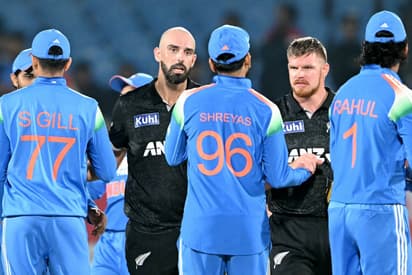
When India and New Zealand take the field for the third and final ODI at the Holkar Stadium, Indore, on Sunday, January 18, 2026, the stakes could scarcely be higher. With the series locked at 1-1, the decider promises not just a winner but a compelling narrative of two evenly matched sides, contrasting strengths, and a venue that almost guarantees fireworks. Given the batting-friendly nature of the surface and the form of several key players, all signs point toward another high-scoring thriller.
A Series Finely Poised
The first two ODIs of the series have followed a familiar yet fascinating pattern—India’s formidable batting depth countered by New Zealand’s discipline, composure, and adaptability. The opener in Vadodara set the tone. India eventually crossed the line, thanks largely to a masterful 93 from Virat Kohli, who once again showcased his ability to anchor an innings under pressure. Yet, despite the victory, alarm bells rang for the hosts as the Black Caps piled up 300 for eight, exposing cracks in India’s bowling attack.
The second ODI in Rajkot swung the momentum New Zealand’s way. Opting to field first, the visitors produced a near-flawless bowling performance. Medium-pacer Kristian Clarke rattled India’s top order, removing Rohit Sharma, Kohli, and Shreyas Iyer in quick succession. Michael Bracewell and left-arm spinner Jayden Lennox then tightened the screws through the middle overs. Their combined figures of 20-1-76-2 may not appear devastating on paper, but they were crucial in stalling India’s momentum. K.L. Rahul’s unbeaten 112 was the lone bright spot as India finished with a below-par 284 for seven.
Under lights, with conditions easing and dew coming into play, New Zealand’s batters looked a class apart. Will Young’s fluent 87 laid the foundation before Daryl Mitchell delivered a sensational unbeaten 131, guiding the Kiwis home with seven wickets in hand and 15 balls to spare. The victory not only leveled the series but also underlined New Zealand’s growing confidence in Indian conditions.
The Holkar Stadium Factor
If there is one venue in India that epitomizes run-fests, it is the Holkar Stadium. Short boundaries, a flat pitch, and quick outfield make it a batter’s paradise. The last ODI India played here, in September 2023 against Australia, remains etched in memory. Shubman Gill’s elegant 104 and Shreyas Iyer’s commanding 105 powered India to a colossal 399 for five. Australia were eventually thrashed by 99 runs (via the DLS method), reinforcing Indore’s reputation as a nightmare for bowlers.
The expectation ahead of the decider is no different. Anything under 320 could be considered par, and chasing under lights has traditionally been easier due to dew. Toss, therefore, could play a decisive role, though both captains may back their batting depth regardless of whether they bat or bowl first.
Gill the Captain, Gill the Batter
One of the most intriguing storylines of this series is Shubman Gill’s role as captain. Still only in his mid-20s, Gill represents the new face of Indian cricket—technically sound, mentally composed, and increasingly authoritative. His leadership will be under scrutiny in the decider, particularly in how he marshals his bowling resources.
As a batter, Gill’s importance cannot be overstated. Indore suits his stroke-making perfectly, allowing him to play through the line and dominate both pace and spin. A big knock from the captain at the top could set the tone for India’s innings and put immediate pressure on New Zealand’s bowlers.
Alongside Gill, Shreyas Iyer’s return from a serious injury adds another layer of intrigue. Iyer has been a key cog in India’s middle order over the years, especially against spin. While he looked short of rhythm in Rajkot before being dismissed by Clarke, Indore offers him the ideal stage to rediscover his fluent best.
India’s Batting: Depth and Firepower
Despite their struggles in the second ODI, India’s batting lineup remains one of the most formidable in world cricket. Rohit Sharma and Shubman Gill at the top offer a blend of experience and elegance. Virat Kohli, even when not scoring big hundreds, continues to be the glue that holds the innings together. K.L. Rahul’s century in Rajkot was a timely reminder of his class and adaptability, particularly in rebuilding after early setbacks.
The inclusion of players like Yashasvi Jaiswal and Ayush Badoni adds explosiveness, while Ravindra Jadeja’s all-round abilities provide balance. On a surface like Indore, India’s batters will back themselves to dominate, provided they can negotiate the initial movement with the new ball.
Bowling Woes for the Hosts
India’s primary concern heading into the decider lies firmly with their bowling attack. The spinners, traditionally India’s strength in home conditions, have struggled to make an impact. Ravindra Jadeja and Kuldeep Yadav have found little assistance from the pitches so far and have been unable to strike at regular intervals.
With Indore expected to offer minimal turn, India may consider tweaking their combination. Left-arm pacer Arshdeep Singh could come into contention, particularly to exploit any early swing and provide variation at the death. Mohammed Siraj’s role will be crucial with the new ball, while the likes of Prasidh Krishna and Harshit Rana will need to maintain discipline in the middle overs—no easy task on a ground known for its unforgiving boundaries.
New Zealand: Quietly Confident, Ruthlessly Efficient
New Zealand’s success in this series has been built on collective effort and tactical clarity. Michael Bracewell has led from the front, not just with his all-round contributions but also with astute decision-making. The Black Caps have adapted quickly to Indian conditions, a testament to their preparation and depth.
The batting lineup looks well settled. Devon Conway and Will Young provide stability at the top, while the middle order—featuring Daryl Mitchell, Glenn Phillips, and Henry Nicholls—has the firepower to accelerate at will. Mitchell, in particular, has been outstanding, combining brute strength with smart shot selection.
In the bowling department, New Zealand have found the right balance between containment and aggression. Clarke’s breakthroughs in Rajkot shifted the momentum early, while the spinners have focused on building pressure rather than chasing wickets. On a flat Indore pitch, that approach will be tested, but the Kiwis have shown they are more than capable of adapting.
The Historical Context
A series decider in India carries added significance for New Zealand, who are chasing their first ODI series win on Indian soil. Past tours have often seen them compete fiercely, only to fall short at the final hurdle. This time, however, the balance feels different. The Black Caps arrive in Indore not as underdogs but as genuine contenders.
For India, the match represents an opportunity to reaffirm their dominance at home and silence questions around their bowling depth. A series win would also serve as a morale booster as they continue building toward future global tournaments.
Key Battles to Watch
Several individual contests could shape the outcome of the decider. Gill versus Jamieson with the new ball, Kohli against the Kiwi spinners in the middle overs, and Mitchell’s power-hitting against India’s death bowlers are just a few that stand out. How India’s spinners cope with the flat track and aggressive New Zealand batters could well decide the match.
Conditions and Strategy
Weather is expected to be clear, and dew will likely play a role in the second innings. Captains may prefer chasing, but a big first-innings total could still apply scoreboard pressure. Flexibility and adaptability will be key, particularly for the bowlers.
The Final Word
All ingredients are in place for a blockbuster finale. A batting-friendly surface, two confident teams, and a series on the line make this decider one of the most anticipated ODIs of the season. If India’s batters fire collectively, another home series win beckons. But if New Zealand continue their disciplined, fearless approach, history could be made.
At Indore, where runs flow freely and margins are often thin, the smallest lapse could prove decisive. Expect fireworks, drama, and a fitting climax to a fiercely contested series.