
Indore — New Zealand scripted a landmark chapter in their cricketing history on Sunday night, clinching their first-ever One Day International series victory on Indian soil with a commanding 41-run win in the third and deciding ODI. Powered by magnificent centuries from Daryl Mitchell and Glenn Phillips, the Black Caps overcame a valiant Virat Kohli hundred to seal the three-match series 2–1, reinforcing their growing reputation as one of the most resilient and adaptable touring sides in world cricket.
The triumph comes barely two years after New Zealand’s unprecedented 3–0 Test series sweep in India, underscoring a broader shift in the competitive balance when these two sides meet in subcontinental conditions. This ODI success, achieved against a formidable Indian lineup in front of passionate home crowds, represents not just a statistical milestone but a symbolic breakthrough for New Zealand cricket.
A Series of Fine Margins and Rising Intensity
From the outset, the ODI series promised intrigue. India, led by the young and increasingly authoritative Shubman Gill, entered the contest with confidence, buoyed by their depth, familiarity with conditions, and a home record that remains the envy of world cricket. New Zealand, meanwhile, arrived without several senior players but with a squad brimming with quiet confidence, versatility, and recent experience of success in India.
The first two matches saw momentum swing sharply. India struck first, showcasing their batting firepower and bowling depth. New Zealand responded with composure in the second ODI, leaning on their middle-order solidity and disciplined bowling to level the series. By the time the teams arrived in Indore for the decider, the stage was set for a high-stakes contest defined by pressure, adaptability, and execution.
What unfolded was a match that encapsulated the modern ODI game: explosive batting, rapid shifts in momentum, individual brilliance, and tactical nous under pressure.
Early Blows, Calm Recovery
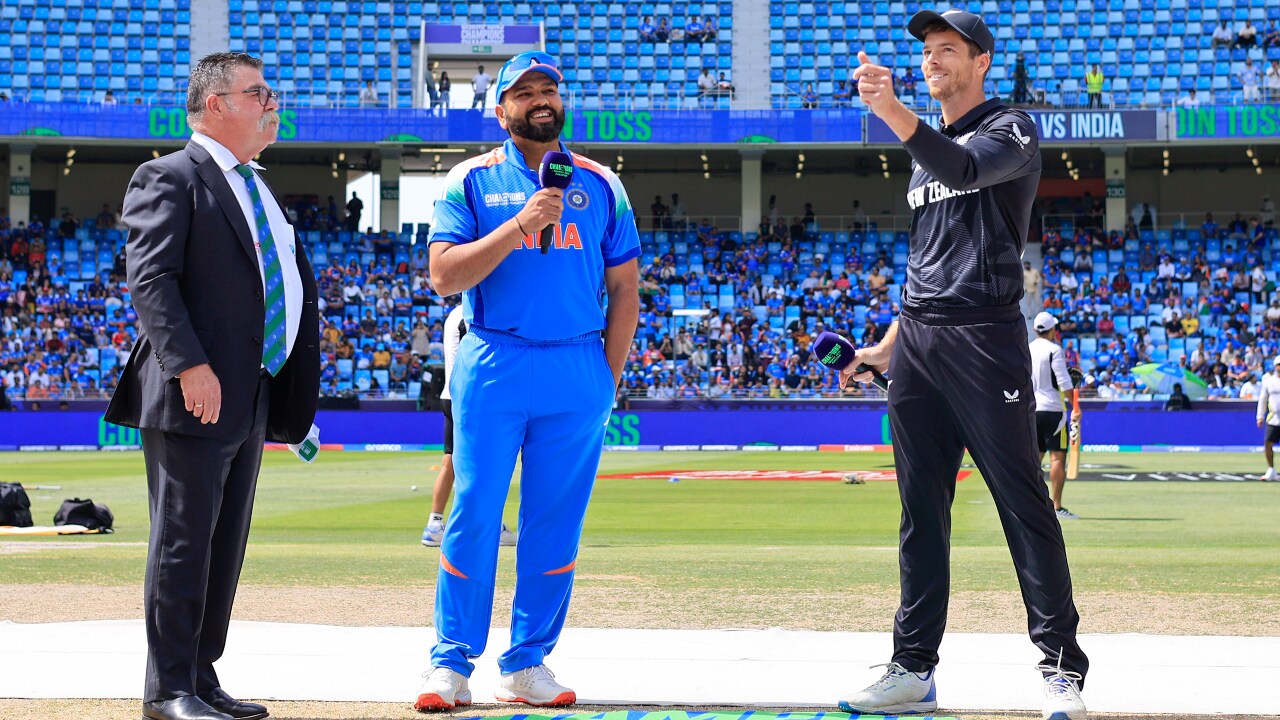
After winning the toss, India opted to field, banking on early movement and the opportunity to chase under lights. Their decision seemed immediately vindicated as Harshit Rana and Arshdeep Singh produced a dream start with the new ball.
Devon Conway and Henry Nicholls, two of New Zealand’s most dependable top-order batters, were dismissed cheaply inside the Powerplay. The early breakthroughs electrified the Indore crowd and put the visitors on the back foot at 12 for 2, raising familiar questions about New Zealand’s ability to rebuild in challenging conditions.
However, what followed was a masterclass in composure and partnership-building.
Will Young and Daryl Mitchell steadied the innings with a period of sensible accumulation, absorbing pressure and forcing India to rotate their bowlers earlier than planned. Young played the supporting role with discipline, allowing Mitchell to find his rhythm. Although Rana struck again to remove Young, the foundation had been laid for New Zealand’s middle order to take control.
Mitchell and Phillips Turn the Tide
Glenn Phillips’ arrival at the crease marked the turning point of the match — and, arguably, the series. Together with Mitchell, Phillips orchestrated a breathtaking counterattack that wrested momentum away from India and silenced the home crowd.
Mitchell, in sublime form throughout the series, showcased the full range of his ODI batting prowess. He rotated the strike expertly against spin, punished loose deliveries, and repeatedly found the gaps with precision rather than brute force. As the innings progressed, his confidence grew, and the boundaries began to flow.
Phillips complemented Mitchell perfectly. Known for his power and athleticism, Phillips played with controlled aggression, taking calculated risks and targeting specific bowlers. The duo accelerated sharply around the halfway mark, exploiting a brief lapse in India’s bowling discipline and placing immense pressure on the spinners.
The 219-run partnership was the backbone of New Zealand’s innings. Mitchell smashed 15 fours and three sixes en route to his ninth ODI hundred — his second consecutive century in the series — while Phillips followed with a century of his own, blending flair with maturity.
Though both batters departed in the 44th over, the damage had already been done. Captain Michael Bracewell added valuable late runs, ensuring New Zealand posted an imposing 337 for 8 — a total that tested India’s batting depth and mental resolve.
India’s Stuttering Start
Chasing 338 on a true Indore surface was never going to be straightforward, but India possessed the batting firepower to believe. Shubman Gill, continuing his ascent as a leader and opening batter, began confidently, striking the ball cleanly and setting the tone for the chase.
However, New Zealand struck an early and significant blow when Rohit Sharma was dismissed inside the Powerplay. The loss of the experienced opener injected uncertainty into the Indian innings, and it soon snowballed into a full-blown crisis.
Within the space of six overs, India lost Gill, Shreyas Iyer, and KL Rahul. At 71 for 4 after just 13 overs, the hosts found themselves in deep trouble, with the required run rate climbing and New Zealand’s bowlers sensing history.
The Black Caps’ bowling was disciplined and intelligent. Rather than searching for magic deliveries, they applied consistent pressure, backed by sharp fielding and clear plans. Every dot ball felt magnified, every misjudgment costly.
Kohli Stands Tall Once Again
If there was one man capable of restoring belief, it was Virat Kohli. In the midst of a remarkable resurgence, Kohli once again assumed responsibility, anchoring the chase with trademark intensity and focus.
He found an able partner in Nitish Kumar Reddy, whose composed half-century belied his relative inexperience. Together, the pair stitched an 88-run partnership that steadied the innings and briefly swung momentum back towards India.
Kohli’s innings was a blend of classical strokeplay and calculated aggression. He punished anything short or wide, ran hard between the wickets, and manipulated the field with ease. As he crossed three figures, bringing up his 54th ODI hundred, the Indore crowd erupted.
In the process, Kohli surpassed Ricky Ponting to become the highest run-scorer at No. 3 in ODI cricket history — another milestone in a career already rich with records. It was a reminder, yet again, of his enduring greatness and his ability to rise in moments of pressure.
New Zealand Regain Control
Just as India appeared to be clawing their way back, New Zealand struck decisively. Kris Clarke delivered the crucial breakthrough by dismissing Nitish Kumar Reddy, breaking the partnership and opening the door for the lower order.
Jayden Lennox followed up by removing Ravindra Jadeja, leaving India at 176 for 6 and facing a steep climb. Yet the fight was far from over.
Harshit Rana joined Kohli in a fearless counterattacking stand that briefly reignited hopes of an improbable comeback. The pair added 99 runs, playing with freedom and intent, forcing New Zealand’s bowlers to stay calm under pressure.
That calm ultimately proved decisive. Zakary Foulkes delivered a double blow, first dismissing Rana and then removing Mohammed Siraj with the very next ball. Suddenly, the equation tilted firmly back in New Zealand’s favour.
Kohli continued to battle, finding boundaries alongside Kuldeep Yadav, but the task became increasingly insurmountable. When Clarke induced a miscue from Kohli, allowing Mitchell to complete the catch, the contest was effectively decided.
India were eventually bowled out for 296 in 46 overs, falling 41 runs short of the target.
A Defining Moment for New Zealand Cricket
As the final wicket fell, New Zealand players embraced with visible emotion. This was not just another overseas series win; it was a breakthrough decades in the making.
India has long been one of the most challenging destinations for touring sides, particularly in limited-overs cricket. Conditions, crowd pressure, and India’s formidable depth have historically tilted the balance heavily in the hosts’ favour. For New Zealand to come away with a series victory speaks volumes about the evolution of their cricketing structure.
This success reflects years of investment in adaptable players, flexible strategies, and a culture that values composure under pressure. Mitchell’s consistency, Phillips’ explosiveness, and the bowlers’ discipline epitomised New Zealand’s collective strength.
What It Means for India
For India, the series loss will prompt introspection rather than panic. Despite the defeat, there were notable positives: Kohli’s sustained excellence, Gill’s leadership growth, and flashes of promise from younger players like Reddy and Rana.
However, the series also exposed vulnerabilities. Middle-order collapses, lapses in bowling discipline during key phases, and an over-reliance on individual brilliance remain areas of concern, particularly with major tournaments on the horizon.
The defeat serves as a timely reminder that even at home, India cannot afford complacency — especially against teams that are tactically astute and mentally resilient.
Eyes on the T20 World Cup
The two sides will next face off in a five-match T20I series starting Wednesday, their final assignment before the ICC Men’s T20 World Cup 2026, which begins on February 7.
Both teams will view the series as a crucial opportunity to fine-tune combinations, assess form, and build momentum. For New Zealand, the ODI triumph provides confidence and belief. For India, the T20Is offer a chance to reset and respond.
If the ODI series was any indication, fans can expect fiercely contested cricket — and perhaps more history in the making.
For now, though, the moment belongs to New Zealand. In Indore, under the floodlights, they achieved what no Black Caps side had done before: win an ODI series in India. It was a victory forged through patience, partnerships, and unshakable belief — a triumph that will be remembered as a defining milestone in New Zealand’s cricketing journey.