
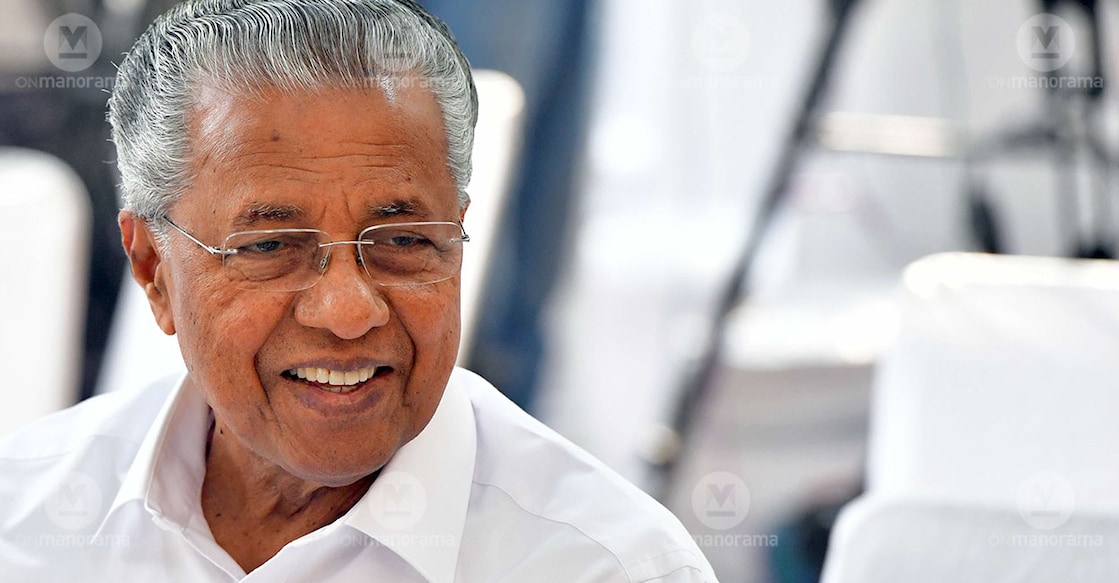
Thiruvananthapuram — Kerala Chief Minister Pinarayi Vijayan on Sunday delivered one of his strongest critiques yet of the BJP-led Union government, accusing it of systematically marginalising Muslims and fostering a political climate in which minority communities are increasingly treated as “second-class citizens.”
Speaking at the concluding event of the Kerala Yatra, a statewide march organised by the Kerala Muslim Jamaat, Vijayan warned that India’s secular and democratic foundations were under severe threat. He said recent laws, policy decisions and the broader political narrative emanating from New Delhi had created an atmosphere of fear and insecurity among Muslims across the country.
“Muslims in this country are being treated as second-class citizens,” Vijayan told a large gathering in Thiruvananthapuram. “Several decisions taken by the central government are not meant to unite society but to isolate minorities and weaken their confidence in the Constitution.”
The Kerala Yatra, led by prominent Islamic scholar and Sunni leader A.P. Abubacker Musliyar, began on January 1 in Kasargod and traversed the length of the state before culminating in the capital. Organisers said the march was intended to promote communal harmony, reaffirm constitutional values and push back against what they described as the growing normalisation of hate politics.
A Direct Political Challenge
Vijayan’s remarks place Kerala firmly at odds with the political direction of the Centre, at a time when debates over citizenship, religious identity and minority rights have become increasingly polarised.
Without naming Prime Minister Narendra Modi or the BJP directly, the Chief Minister accused the Union government of pursuing a divisive agenda that erodes the idea of equal citizenship. Laws such as the Citizenship (Amendment) Act (CAA), he said, had sent a clear message of exclusion to Muslims.
“These laws are not neutral,” Vijayan said. “They make Muslims feel like outsiders in their own country. They strike at the heart of the constitutional promise that all citizens are equal before the law.”
He also criticised proposed amendments to the Waqf Act, arguing that they undermined the autonomy of Muslim religious institutions and were part of a broader attempt to weaken minority communities socially and economically.
Fear, Insecurity and Daily Humiliation
The Chief Minister pointed to what he described as a disturbing pattern of harassment and violence against Muslims in several BJP-ruled states. Citing reports from Uttar Pradesh, Bihar, Uttarakhand, Rajasthan, Haryana and Assam, Vijayan said Muslims were increasingly subjected to intimidation, public humiliation and targeted violence because of their religious identity.
“Mob lynching, open threats and hate speeches are becoming increasingly common,” he said. “These are not isolated incidents. They reveal a dangerous pattern where hatred is normalised and even encouraged.”
Referring to a recent incident in Uttar Pradesh, Vijayan said a leader associated with a Hindutva organisation was seen distributing weapons and issuing calls for violence against Muslims. “When such acts take place in public and go unpunished, it sends a message that the rule of law is selective,” he added.
The Chief Minister accused those in power of remaining silent in the face of such incidents. “Silence from those in authority only emboldens these elements,” he said. “It creates the impression that hate has official sanction.”
Constitutional Values Under Strain
At the heart of Vijayan’s speech was a warning that India’s constitutional framework—built on secularism, pluralism and equal rights—was being steadily hollowed out.
“India is not a theocratic state,” he said. “It is a secular republic where the Constitution guarantees equality and dignity to every citizen, regardless of religion. When one community is systematically targeted, the Constitution itself is under attack.”
He argued that attacks on Muslims and Christians, including incidents involving places of worship, were not accidental but part of a deliberate political strategy to polarise society. “This politics of division thrives on fear,” he said. “It seeks to pit one community against another for electoral gains.”
Vijayan said opposition parties had repeatedly raised these concerns in Parliament and public forums, but meaningful action from the Centre remained elusive. He noted that public anger over issues of communal polarisation and minority rights had begun to surface during elections in several states.
“People are asking why governments fail to protect minorities and why those spreading hate are not punished,” he said. “These are legitimate questions in a democracy.”
Kerala as a Counter-Narrative
Throughout his address, Vijayan positioned Kerala as a counter-model to what he described as the Centre’s divisive politics. He recalled periods of communal tension in the state’s past and said decisive intervention by Left Democratic Front (LDF) governments had helped maintain peace.
“There were attempts to provoke communal violence even in Kerala,” he said. “Firm and timely action by the LDF government ensured peace and prevented further escalation.”
Kerala, he argued, had shown that communal harmony was not accidental but the result of conscious political choices. “Communalism can be defeated only by standing uncompromisingly for secular values,” Vijayan said.
The Chief Minister’s remarks resonate with Kerala’s long-standing political culture, where leftist and secular ideologies have historically held significant sway, and where Muslims constitute around a quarter of the population.
The Role of Civil Society and Religious Organisations
The Kerala Yatra itself was framed by organisers as a response to what they see as shrinking democratic space for minorities. Led by A.P. Abubacker Musliyar, a respected Islamic scholar, the march emphasised peaceful resistance, constitutional awareness and interfaith unity.
Addressing the gathering, Musliyar said the yatra was not directed against any community but against hatred and discrimination. “This march is about reminding people of the values enshrined in our Constitution,” he said. “It is about unity, justice and mutual respect.”
Leaders of the Kerala Muslim Jamaat echoed Vijayan’s concerns, stressing that Muslims across India felt increasingly vulnerable. One organiser said the yatra was meant to reassure Muslims that they were not alone and to assert their equal stake in the country’s future.
“The Constitution promises equality to everyone,” the organiser said. “We are here to remind the nation of that promise.”
A Broader National Debate
Vijayan’s comments come amid an intensifying national debate over the state of minority rights in India. Over the past decade, critics of the BJP government have accused it of promoting a majoritarian vision of the nation that sidelines religious minorities, particularly Muslims.
Supporters of the government reject this charge, arguing that policies such as the CAA are aimed at protecting persecuted minorities from neighbouring countries and that law-and-order issues are being exaggerated for political purposes.
However, human rights organisations and independent observers have repeatedly flagged concerns about hate speech, mob violence and the use of state power against minorities. International bodies and foreign governments have also, at times, expressed unease over India’s human rights record.
Within this context, Vijayan’s remarks reflect a broader resistance among opposition-ruled states to what they see as an erosion of federalism and constitutional safeguards.
Electoral and Political Implications
The Chief Minister’s strong words also have clear political implications. With national elections on the horizon, questions of identity, citizenship and secularism are expected to play a central role in political discourse.
By aligning himself so openly with Muslim concerns, Vijayan reinforces the Left’s image as a defender of minority rights, while also challenging the BJP’s narrative of nationalism and development.
Political analysts note that while Kerala remains a stronghold for the Left, Vijayan’s statements are aimed at a national audience as well. “This is about positioning Kerala as a moral and political counterweight to the Centre,” said a senior political commentator based in Thiruvananthapuram.
A Call for Vigilance and Unity
Concluding his speech, Vijayan urged citizens to remain vigilant against forces that seek to divide society along religious lines. He stressed that democratic rights could not be taken for granted and required constant defence.
“Yatras like this are important because they raise awareness,” he said. “They remind society that unity is our strength and that hatred only weakens us.”
He ended on a note of inclusion, reiterating that India belongs to all its people. “This country is not the property of one religion or one ideology,” Vijayan said. “It belongs equally to every citizen who believes in the Constitution.”
As applause rang out across the venue, the message was unmistakable: the battle over India’s secular identity is far from over, and leaders like Pinarayi Vijayan intend to keep it firmly in the public spotlight.