
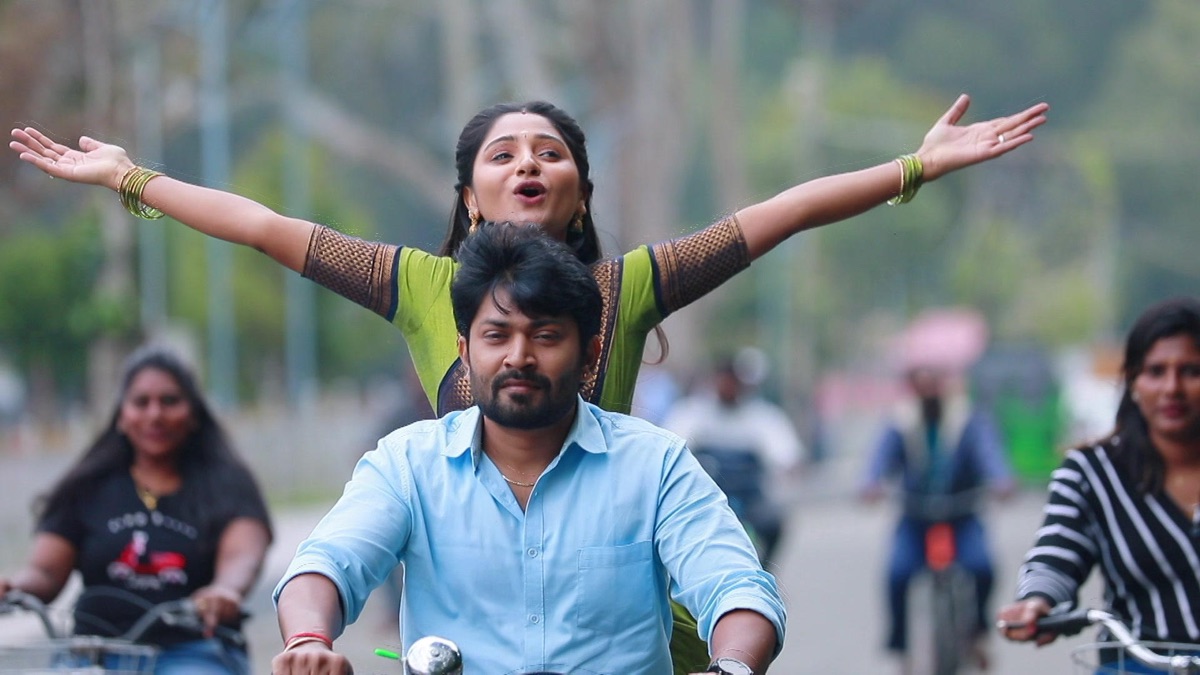
In the ever-evolving landscape of Tamil television, where romance, familial drama, and societal themes often intertwine, few series have captured the audience’s attention in 2025 like Sindhu Bairavi Kacheri Arambam (transl. Sindhu Bairavi Performance Begins). Premiering on Star Vijay on 20 January 2025 and available digitally on JioHotstar, the series combines emotionally charged storytelling with social commentary, creating a narrative that resonates with both traditional and modern audiences. Produced by Rajavelu under the banner of A Tele Factory and directed by Francis Kathiravan, acclaimed for his previous work on Chellamma, the show has established itself as a benchmark for character-driven serials in the Tamil television industry.
The Premise: Forced Marriages, Family Duty, and Love
The story revolves around two sisters, Sindhu and Bairavi, whose lives are irrevocably altered by societal norms, familial expectations, and their own decisions. Sindhu, the elder sister, is initially in love with Siva (played by Dhiraviam Rajakumaran), who is hesitant to reciprocate her feelings. Undeterred, Sindhu cleverly manipulates circumstances to ensure that she marries Siva, an act that sets the tone for the series’ exploration of agency and assertiveness.
Meanwhile, Bairavi (played by Aarthi Subash) is forced to marry Aarumugam (Anandha Krishnan) for the sake of family honor, despite her reluctance. The dual narrative structure allows the series to explore the nuanced emotional landscapes of both sisters, highlighting the societal pressures that shape their decisions and the consequences of constrained choice.
By focusing on two parallel marriages—one initiated by love and strategy, the other by duty—the series examines the tension between personal desire and family obligation, a theme that resonates strongly with Tamil audiences accustomed to narratives steeped in tradition.
Character Analysis: Depth, Motivation, and Conflict
One of the show’s greatest strengths is its multidimensional characters:
- Sindhu: A proactive protagonist, Sindhu subverts the typical portrayal of passive women in Tamil serials. Pavithra B. Naik brings a balance of intelligence, resilience, and emotional vulnerability to the character. Her strategic thinking during her marriage maneuver demonstrates a rare blend of cleverness and emotional authenticity.
- Siva: Initially resistant to love, Siva’s journey is one of gradual emotional awakening. Dhiraviam Rajakumaran portrays the complexity of a man caught between societal expectations, personal pride, and evolving feelings for Sindhu. His internal conflicts and moments of vulnerability make him relatable to viewers who recognize the pressures of tradition and expectation.
- Bairavi: Representing the voice of reluctant compliance, Bairavi’s marriage to Aarumugam exemplifies the sacrifices women often make in the name of family honor. Aarthi Subash’s nuanced performance captures the subtle frustration, adaptation, and eventual growth that define Bairavi’s arc.
- Aarumugam: As Bairavi’s husband, Aarumugam is portrayed not as a villain but as a product of societal norms, family expectations, and personal responsibility. Anandha Krishnan’s interpretation adds depth, showing a man navigating the delicate balance of duty and empathy.
- Antagonists and Supporting Characters: Characters such as Mahalakshmi (Gaayathri Krishnan) add layers of conflict, representing societal and familial pressures that challenge the protagonists. The supporting cast, including Sumalatha Madhan as Annapoorani and Praveen Devasagayam/Aron Sanjay as Isacci, enrich the narrative, providing moral complexity and depth to family dynamics.
By presenting characters with realistic motivations, the series avoids the binary “good vs evil” trope, offering viewers morally nuanced storytelling that reflects real-world human behavior.
Episode Analysis and Narrative Pacing
Since its premiere, Sindhu Bairavi Kacheri Arambam has maintained a consistent narrative rhythm, blending high-tension confrontations with introspective moments. The first 50 episodes, for example, establish the central marriages, introduce familial conflicts, and explore the sisters’ adaptation to their new circumstances.
- Episodes 1–10: Focus on Sindhu’s courtship of Siva, culminating in the cleverly orchestrated marriage. These episodes set the foundation for Sindhu’s proactive character, highlighting her intelligence and emotional determination.
- Episodes 11–20: Introduce Bairavi’s coerced marriage to Aarumugam, contrasting Sindhu’s empowered choice with her sister’s reluctant compliance. Themes of duty, honor, and societal expectation emerge as central conflicts.
- Episodes 21–35: Intensify the drama with antagonistic forces, particularly Mahalakshmi, whose interference catalyzes several conflicts. This period also explores Siva and Sindhu’s evolving relationship, highlighting trust, misunderstanding, and emotional bonding.
- Episodes 36–50: Focus on internal family dynamics, revealing the personal growth of Bairavi and the gradual emotional alignment of Aarumugam with his wife. These episodes explore reconciliation, self-reflection, and adaptation, providing a balance between dramatic tension and character development.
The series’ pacing—alternating between high-stakes confrontations and reflective sequences—allows audiences to invest in the characters’ emotional journeys while maintaining engagement with the unfolding plot.
Production Insights: Crafting a Modern Tamil Drama
Sindhu Bairavi Kacheri Arambam benefits from strong production values, which enhance its storytelling. Director Francis Kathiravan employs a cinematic approach, utilizing close-ups and visual framing to emphasize emotional intensity. Scenes depicting familial confrontation or emotional revelation are shot with careful attention to lighting and composition, elevating the series beyond typical soap opera aesthetics.
The production team also pays attention to costumes, set design, and cultural authenticity. Traditional Tamil attire, household décor, and ceremonial sequences are depicted with a sense of realism, reinforcing the series’ rootedness in Tamil culture. Music and background scoring further complement the narrative, enhancing the tension, romance, and dramatic revelations.
Audience Reception and Social Media Impact
The show’s digital presence on JioHotstar has significantly broadened its reach, allowing younger viewers and international Tamil-speaking audiences to engage with the series. Online discussions, fan forums, and episode previews have generated significant buzz, particularly regarding Sindhu’s clever tactics in her marriage and Bairavi’s emotional journey.
Fans have praised the series for:
- Strong Lead Performances: Pavithra B. Naik and Dhiraviam Rajakumaran are lauded for their nuanced portrayals of Sindhu and Siva.
- Social Relevance: By exploring forced marriages, family honor, and women’s agency, the series resonates with audiences confronting similar societal norms.
- Moral Complexity: Characters such as Mahalakshmi and Isacci are not one-dimensional villains but layered individuals, allowing viewers to empathize with multiple perspectives.
Social media platforms have become a hub for fan theories, discussions on character decisions, and debates over ethical dilemmas, demonstrating the series’ cultural relevance.
Comparative Analysis with Contemporary Tamil Serials
In comparison to other 2025 Tamil serials such as Dhanam – Ungalil Oruthi and Shelly D’Valle’s creative-influenced shows, Sindhu Bairavi Kacheri Arambam stands out for its combination of romance, social commentary, and moral nuance. While Dhanam focuses on women navigating professional and societal challenges as an auto driver and Theeyaai Oru Theeraa Kaadhal (Sakthivel) emphasizes rebellious love and societal resistance, Sindhu Bairavi Kacheri Arambam bridges both worlds:
- It explores personal agency in love, akin to Sakthivel.
- It highlights societal pressures and female resilience, paralleling Dhanam.
This combination gives the series a broader appeal, attracting viewers interested in both romantic drama and socially conscious storytelling.
Cultural and Social Significance
Beyond entertainment, the series carries cultural weight. The depiction of Sindhu taking initiative in her marriage challenges traditional norms, promoting discussions on women’s autonomy within Tamil households. Similarly, Bairavi’s story sheds light on the consequences of societal coercion, encouraging empathy and reflection among viewers.
The series also subtly critiques patriarchal systems, highlighting the psychological and emotional burdens imposed on women in traditional family structures. By giving each character a voice and complexity, the show contributes to a progressive narrative in mainstream Tamil television.
Challenges and Production Adaptations
Like many long-running serials, Sindhu Bairavi Kacheri Arambam faced casting and production challenges. The replacement of Praveen Devasagayam with Aron Sanjay required careful narrative adjustments to maintain continuity. Despite such challenges, the series continued to receive positive reception, demonstrating the production team’s adaptability and commitment to storytelling integrity.
Future Outlook
As the series progresses, producers and writers have hinted at:
- Deepening Romantic Arcs: Exploring the emotional evolution of Sindhu and Siva’s relationship.
- Expanding Family Dynamics: Introducing new conflicts and alliances within the extended family.
- Character Growth: Further developing Bairavi and Aarumugam’s adaptation to their arranged marriage.
- Societal Themes: Continuing to address gender norms, autonomy, and personal agency.
With its mix of romance, drama, and social commentary, the series is poised to remain a significant presence on Tamil television for the foreseeable future.
Conclusion
Sindhu Bairavi Kacheri Arambam exemplifies modern Tamil television’s potential to merge romance, family drama, and social realism. Through compelling performances, layered characters, and culturally grounded storytelling, the series has captivated audiences and sparked conversations about love, marriage, and personal autonomy.
In a television landscape often criticized for predictability, the series stands out for its nuanced portrayal of women navigating societal expectations, moral dilemmas, and emotional growth. As the story unfolds on Star Vijay and JioHotstar, it continues to reflect the challenges, resilience, and aspirations of contemporary Tamil society, making it a landmark series in 2025.