
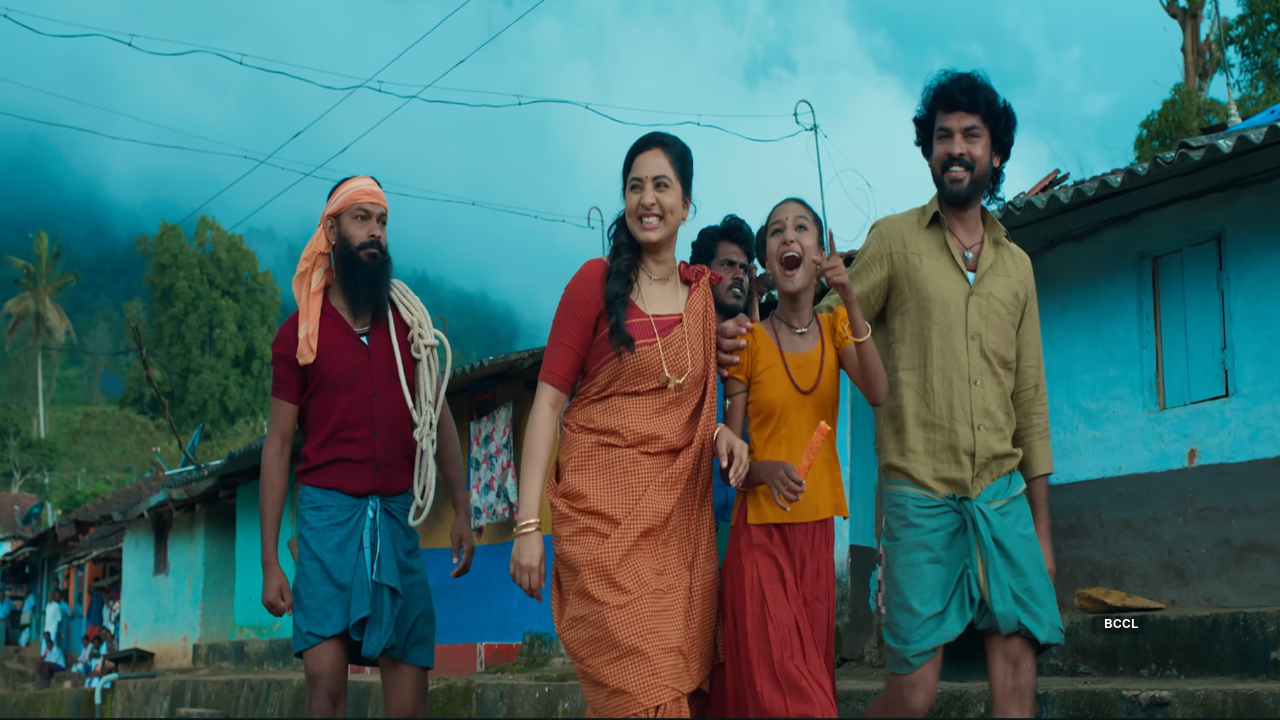
Cinema has always held a mirror to society, reflecting both the ordinary and the extraordinary, the personal and the communal, the mystical and the tangible. In this vein, “Tamil Dhool Mahasenha”, directed by Dhinesh Kalaiselvan, emerges as a compelling drama-thriller that explores human emotion, ethical dilemmas, and cultural reverence, all set against the lush backdrop of a mystical forest. Released theatrically on 12 December 2025, the film spans 135 minutes, delivering an ambitious narrative that combines action, emotion, and spirituality, while targeting audiences across five languages: Tamil, Hindi, Kannada, Malayalam, and Telugu.
Produced under the Marudham Production banner, Mahasenha has already generated significant anticipation among South Indian cinema enthusiasts, not only for its multi-lingual release strategy but also for its promise of weaving a cinematic universe grounded in folklore, human connection, and moral complexity. Although the producer’s identity remains undisclosed, the project’s ambition and scope speak volumes about its cinematic aspirations.
Plot Overview: Collision of Worlds
At its core, Mahasenha is a film about convergence—of lives, of destinies, and of forces both human and divine. The story primarily revolves around Vimal, portraying a humble village man who dedicates himself to protecting a sacred temple elephant, a living emblem of spiritual and cultural heritage. The elephant, treated with reverence, represents both the community’s faith and the protective spirit of the village itself. The narrative’s stakes become apparent when this peaceful village collides with external forces—a college trekking group and a mafia gang whose motives threaten both the sacred elephant and the villagers’ safety.
The plot unfolds in a forest setting imbued with mystical elements, where the serene and the dangerous coexist. As the trekking group’s adventure inadvertently intersects with criminal activity, the film escalates into an action-driven thriller. Vimal’s unwavering devotion to the elephant positions him as the moral anchor, while the other characters, through their encounters with the forest, the elephant, and one another, undergo transformations that speak to broader human themes of courage, loyalty, and redemption.
The climax of Mahasenha is both literal and symbolic: the elephant emerges as the protector of the village, embodying a confluence of cultural reverence, communal solidarity, and natural might. This convergence allows the narrative threads to coalesce in a powerful conclusion that is both action-packed and emotionally resonant.
Genre and Cinematic Style
Categorized as a drama thriller, Mahasenha balances intense, action-oriented sequences with deeply emotional and character-driven storytelling. The forest setting serves not just as a backdrop but as a narrative device that amplifies suspense and heightens the film’s dramatic tension. Scenes are carefully choreographed to merge natural beauty with high-stakes conflict, creating a cinematic rhythm that oscillates between tension, reflection, and awe.
The director, Dhinesh Kalaiselvan, demonstrates an adept understanding of tonal balance. By integrating moments of quiet introspection with high-octane confrontations, he ensures that Mahasenha maintains a compelling narrative momentum while never losing sight of its emotional core. In doing so, the film resonates both as a traditional South Indian drama and as a thriller designed for contemporary audiences seeking cinematic spectacle.
Performances: Anchoring Emotion and Action
Central to the film’s appeal is Vimal, whose portrayal of a devoted villager is grounded, nuanced, and emotionally resonant. Vimal successfully embodies a character whose strength is not derived from brute force alone but from moral conviction and spiritual alignment with his community. His interactions with the elephant are particularly noteworthy, reflecting a bond that feels genuine, respectful, and symbolically rich.
Opposite him, Srushti Dange delivers a performance that complements Vimal’s intensity. Her character, whose motivations intersect with both the trekking group and the mafia gang, adds depth and moral complexity to the narrative. Dange navigates the spectrum of vulnerability, courage, and resourcefulness with grace, making her character a key player in the unfolding drama.
The supporting cast contributes layers to the film’s emotional and narrative architecture. From the college trekking group’s youthful energy to the mafia gang’s calculated menace, each performance is tailored to reinforce the central themes of conflict, survival, and moral choice. Notably, the interactions among the characters are used not merely for dramatic tension but to explore broader social and cultural dynamics, reflecting Kalaiselvan’s interest in constructing a story that is as socially resonant as it is entertaining.
Music and Sound Design: Elevating Narrative Emotion
Music, composed by A. Praveen Kumar, plays a crucial role in Mahasenha, reinforcing both the suspense and the emotional resonance of the film. The score strategically uses traditional motifs alongside contemporary orchestration to create a sonic palette that is simultaneously rooted in South Indian culture and accessible to wider audiences.
Sound design further enhances the immersive experience. The forest is alive not just visually but audibly, with rustling leaves, distant calls of wildlife, and the subtle yet commanding presence of the sacred elephant. Action sequences are punctuated with precise audio cues, intensifying the thrill while ensuring that the emotional stakes remain palpable. The combination of music and sound design ensures that viewers are consistently engaged, whether in moments of introspection or adrenaline-fueled suspense.
Themes: Spirituality, Morality, and Human Connection
While Mahasenha offers a visually striking and narratively complex story, it is its thematic depth that sets it apart. At the heart of the film lies an exploration of human morality and the intersection of tradition and modernity. The sacred elephant is not merely an animal but a symbol of the village’s spiritual and cultural values. Protecting it becomes a moral imperative, challenging characters to confront their own priorities, fears, and ethical boundaries.
The forest itself functions as a liminal space—a threshold where the ordinary meets the extraordinary, where human greed, courage, and faith collide. The trekking group’s journey serves as a microcosm of discovery and self-reflection, while the mafia’s intrusion embodies the external pressures that test the community’s cohesion and values. Through these intersecting narratives, Mahasenha interrogates questions of duty, loyalty, and the moral cost of protecting what one holds sacred.
Action and Cinematic Thrills
Though deeply rooted in drama, Mahasenha succeeds as a thriller through its meticulously crafted action sequences. Whether depicting confrontations with the mafia gang, tense chases through the forest, or the climactic defense of the village, these sequences are both visually striking and narratively purposeful. Kalaiselvan demonstrates a keen eye for visual composition, ensuring that each action scene advances the story while maintaining clarity and emotional weight.
The elephant’s involvement in the climax is a standout example of narrative-driven spectacle. Far from being mere spectacle, the elephant’s interventions are integral to both plot and theme, symbolizing the power of nature, faith, and communal solidarity. These sequences are choreographed with care, combining realism with a heightened sense of drama that is central to the film’s impact.
Cinematic Universe Potential
One notable aspect of Mahasenha is its potential as a foundation for a broader cinematic universe. The film’s self-contained story, coupled with its rich world-building, suggests opportunities for sequels or spin-offs that could further explore the interplay of human, cultural, and mystical elements introduced in this initial installment. This ambition distinguishes Mahasenha from standard regional thrillers, signaling a director and production team intent on crafting a long-term narrative ecosystem that engages audiences across languages and regions.
Multi-Lingual Release Strategy
The decision to release Mahasenha in Tamil, Hindi, Kannada, Malayalam, and Telugu is both commercially astute and culturally significant. It allows the film to reach diverse linguistic audiences across India and neighboring markets, expanding its impact beyond the Tamil-speaking demographic. This strategy reflects a growing trend in Indian cinema toward multi-lingual releases, driven by a desire to create pan-Indian appeal while respecting regional identities and storytelling traditions.
Critical Reception and Cultural Significance
Early reception suggests that Mahasenha is being praised for its grounded storytelling, strong performances, and thematic depth. Critics have highlighted the film’s ability to balance thriller elements with emotional resonance, noting that Kalaiselvan’s direction maintains a steady pace while allowing characters to breathe.
Culturally, the film resonates due to its emphasis on community, spirituality, and ethical responsibility. By placing a sacred elephant at the heart of its narrative, Mahasenha taps into deeply held cultural values, using symbolism to explore broader questions of morality, duty, and the human relationship with nature and tradition. This dual appeal—entertainment and cultural reflection—positions the film as a significant addition to contemporary South Indian cinema.
Technical Craftsmanship
From cinematography to editing, Mahasenha demonstrates technical sophistication. The forest landscapes are captured with precision, balancing grandeur and intimacy. Lighting is used to underscore both suspense and emotional intensity, while the editing maintains narrative clarity even during complex, multi-threaded sequences.
The visual language of the film supports its thematic concerns: wide shots highlight the isolation and vulnerability of characters in the forest, while close-ups reveal emotional nuances and internal conflicts. This careful interplay of camera work, performance, and narrative ensures that every scene contributes meaningfully to the story’s overarching impact.
Conclusion: A Cinematic Achievement in Drama-Thriller Storytelling
“Tamil Dhool Mahasenha” is a film that succeeds on multiple levels: as a thriller, it maintains suspense and engagement; as a drama, it delivers emotional depth and character complexity; and as a cultural artifact, it honors spiritual and communal traditions while exploring contemporary ethical dilemmas. Vimal and Srushti Dange’s performances provide emotional anchor points, while the technical craftsmanship of Dhinesh Kalaiselvan and A. Praveen Kumar’s musical score elevate the film to cinematic artistry.
By weaving together mystical symbolism, human conflict, and thrilling action, Mahasenha positions itself as both an entertaining and thought-provoking experience. Its multi-lingual release and potential for a larger cinematic universe suggest that this is a film with ambitions that extend far beyond its initial 135-minute runtime.
For audiences seeking a dramatic thriller that combines action, emotion, and cultural resonance, Tamil Dhool Mahasenha offers a rare blend of spectacle, storytelling, and moral inquiry, marking it as a standout achievement in 2025 South Indian cinema.